Malawian farmers help shape digital plant-health services
Malawští farmáři, pracovníci pro rozšířenou výživu a další uživatelé nyní pomáhají utvářet vývoj digitální služby MaDiPHS pro ochranu rostlin, která usnadňuje přístup k informacím o škůdcích, onemocněních a hospodaření s plodinami. Zásadní roli hraje platforma Viamo 3-2-1 pro farmáře s hlasovými zprávami v místních jazycích, která nevyžaduje smartphone ani internet, a spolu s národní webovou platformou má sloužit různým uživatelům v zemi. Účastníci testování vyzvali k širšímu pokrytí témat – včetně půdního zdraví, hnojiv, zavlažování a počasí – a navrhli vylepšení vizualizací a přístupnosti. Získaná zpětná vazba bude využita k vylepšení služeb před jejich širokým nasazením a k podpoře informovanějších rozhodnutí napříč malawským zemědělstvím.
Around 30,000 people already call a digital agricultural information service in Malawi every month – even though the service has not yet been publicly promoted. Now farmers, extension workers and other users are helping shape how the service should develop.
For many farmers in Malawi, getting timely advice about pests, diseases and crop management can be difficult, particularly in remote areas.
The Malawi Digital Plant Health Service (MaDiPHS), led by NIBIO together with Malawi’s Ministry of Agriculture and national and international partners, aims to make plant-health information easier to access and use.
But before the services can be rolled out more widely, the people who will use them need to have their say.
That is why farmers, extension workers, agro-dealers and policymakers recently tested the services and suggested improvements.
Different services for different users
MaDiPHS brings together several digital services designed for different users across Malawi’s agricultural sector.
One of these is the Viamo 3-2-1 platform, which is primarily aimed at farmers. It allows them to access agricultural information using basic mobile phones. Through voice messages in local languages such as Chichewa, farmers can access advice without needing a smartphone or internet connection.
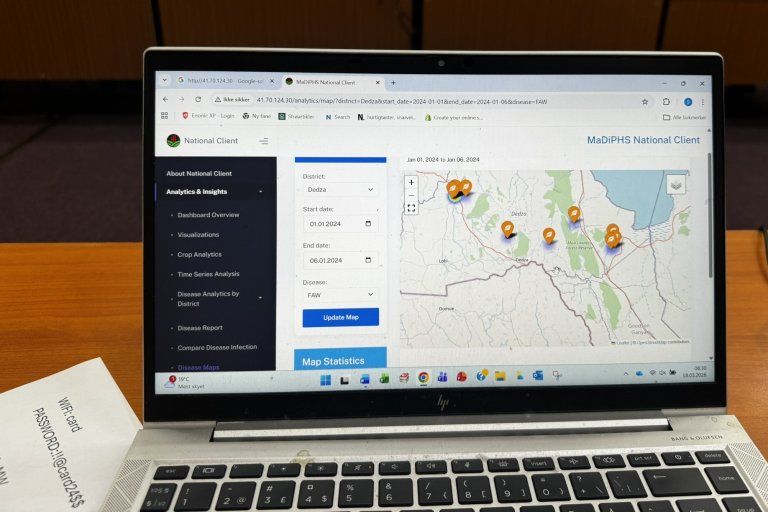
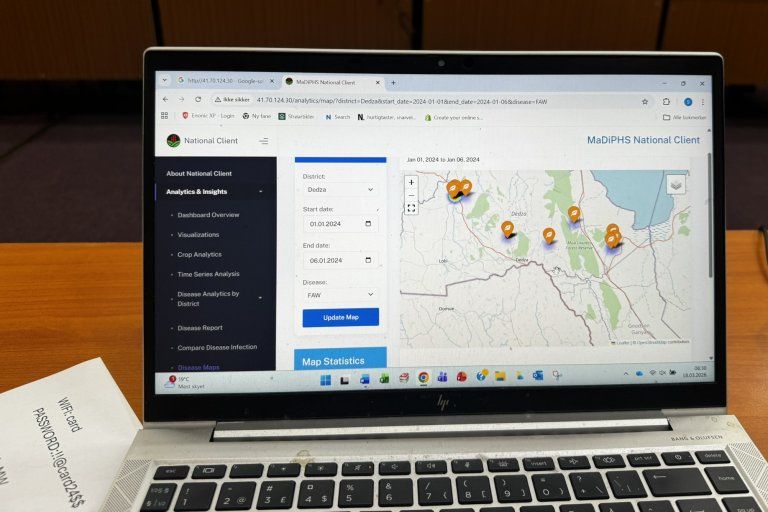
Alongside this farmer-facing service, MaDiPHS is developing a national web platform that brings together plant-health information from a range of sources.
The national platform is intended as a resource for extension workers, policymakers, researchers and others working with agricultural information.
Rather than having to search across multiple sources, users will be able to find data, models and other relevant plant-health resources gathered in one place.
These services are part of the same effort to improve how plant health knowledge is used in Malawi — from supporting farmers in the field to informing research, extension services and decision-making at national level.
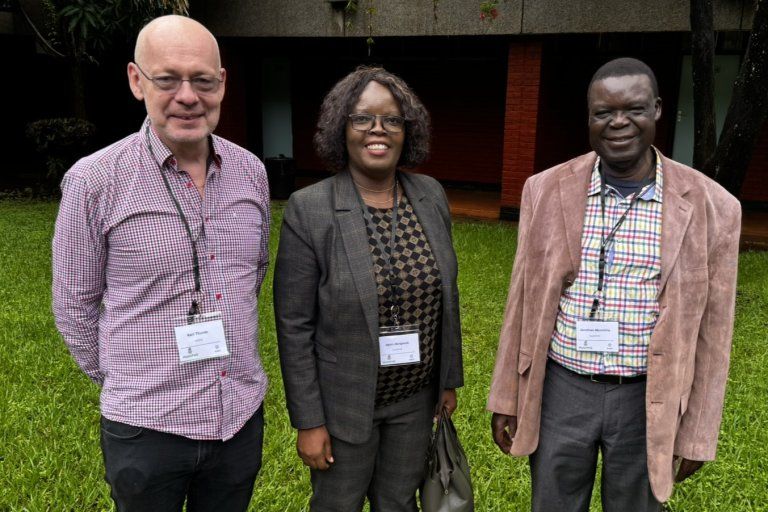
Project leader for MaDiPHS Dr. Karl Thunes from NIBIO, Dr. Agnes Mbachi Mwangwela, Deputy Vice Chancellor at LUANAR and Dr. Jonathan Mkumbira, National Coordinator for MaDiPHS at the workshop which took place at the LUANAR university campus outside Lilongwe in Malawi. Photo: Siri Elise Dybdal
Reaching more farmers
For farmers, one of the biggest challenges is being able to access useful advice when it is needed.
This is where Viamo 3-2-1 could make a difference. By using basic mobile phones and voice messages, the service can reach farmers who may otherwise have limited access to extension services.
Each month, around 30.000 people call the service and listen to agricultural messages developed in the project since its launch in June 2025, despite the service not yet having been publicly promoted or advertised.
Malawian farmer Fatwell Jacob Phiri who participated in the testing event, highlighted the gap between the number of farmers and available extension services as a major challenge.
“A single extension worker cannot help 1,500 farmers,” he said.
Digital services such as Viamo 3-2-1 could help extend that reach, giving farmers another way to get advice on pests, diseases and crop management, he highlighted.
“With this tool, I think many farmers will be able to access extension services.
“It is making it easier to find information,” Phiri said.
Through voice messages in local languages such as Chichewa, farmers can access advice without needing a smartphone or internet connection through the Viamo 3-2-1 platform. Photo: Siri Elise Dybdal
Testing the services with users
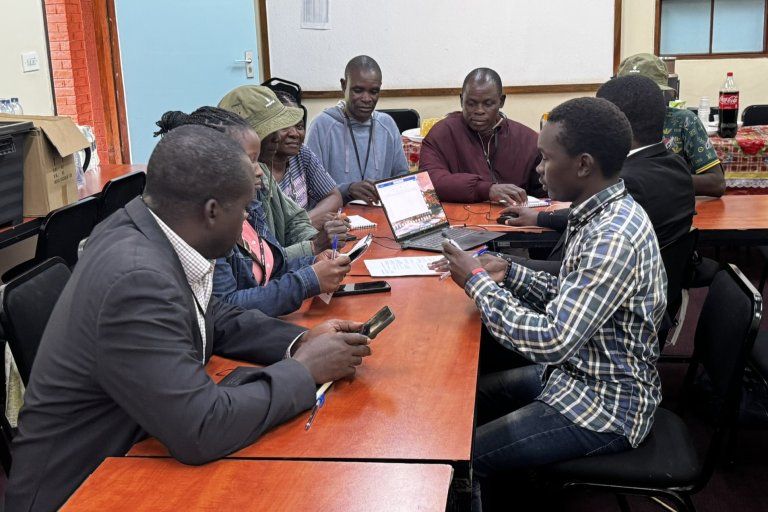
The testing workshop gave the MaDiPHS team an opportunity to put both the Viamo 3-2-1 service and the national platform in front of potential users.
Participants tested how easily they could find information, whether the content was understandable and whether the services addressed their needs.
Jonathan Mkumbira, national coordinator for MaDiPHS, explained that the aim is to make the services as user-friendly as possible and ensure that information can be found quickly.
Participants also wanted the service to cover topics beyond pests and diseases, including soil health, fertilisers, irrigation and weather.
“The possibilities are almost endless. But adding more services would require a lot of additional work,” project leader Karl Thunes from NIBIO commented.
Participants also suggested improvements to graphs and other visualisations, as well as changes to language and accessibility.
For the project team, this kind of input is essential.
“We have been able to finally produce an output that we could try out,” Thunes said.
“The workshop gave us an opportunity to learn how easy the tools are to understand and navigate, and how relevant the information is,” Thunes said.
The feedback will be used to improve the services before they are rolled out more widely.
MaDiPHS is developing a national web platform that brings together plant-health information from a range of sources. The national platform is intended as a resource for extension workers, policymakers, researchers and others working with agricultural information. Photo: Siri Elise Dybdal
From feedback to wider impact
The project is being developed together with local users. Their feedback is helping the team adapt the data, models and services to the needs of Malawi.
“The aim is to create a national resource that can continue to be developed and used in Malawi, while also providing experience that could be useful for similar initiatives elsewhere,” Thunes stated.
“Ultimately, we want to help farmers and others working in agriculture make better more informed decisions.”
Better access to plant-health advice could lead to tangible benefits, including increased crop production, reduced pesticide use and higher incomes for farming families.
The next step now is to turn their suggestions into improvements.
“I look forward to implementing most of the suggestions made by partners, farmers and other users who participated in the workshop,” says Jonathan Mkumbira.
https://www.nibio.no/en/news/2026/malawan-farmers-help-shape-digital-plant-health-services
NIBIO

Beispiel der Dun & Bradstreet-Daten
| Firmenname | AUDI Aktiengesellschaft |
|---|---|
| D-U-N-S-Nummer | 315731679 |
| Registrierungsnummer / Beschreibung | HRB1 Register Number (DE) |
| Registrierungsnummer / Beschreibung | 85049B1 Derived Unique Register Number (DE) |
| Registrierungsnummer / Beschreibung | DE811115368 Value Added Tax Number (DE) |
| Telefon | +49 841890 |
| Subjekttyp | Corporation |
| Rechtsform | Deemed Public Limited Company |
| Jahresumsatz | 64 500 000 000 EUR / 71 157 238 500 USD - 01.01.2024 |
| Mitarbeiterzahl | 86 900 - 01.01.2024 |
| Status | Active |
| Adresse | Auto-Union-Str. 1, Ingolstadt, 85057, Germany |
| Webseite | www.audi.com |
| [email protected] | |
| Geschäftsgegenstand | Mfg motor vehicle/car bodies |
| Eigentumstyp | Privately owned |
| Gründungsdatum | 16.04.1884 |
| Gesetzliche Vertreter | Gernot Döllner |
| Eigentümer | Bundesland Niedersachsen, Streubesitz, GOVERNMENT OF QATAR, Ferdinand Porsche Familien-Privatstiftung, Kai Alexander Porsche, Peter Daniell Porsche, Ferdinand Oliver Porsche, Geraldine Porsche, Mark Philipp Porsche, Hubertus Josef Kiesling, Diana Porsche, Andreas Kiesling, Peter Daniell Porsche, Kai Alexander Porsche, Ferdinand Oliver Porsche, Mark Philipp Porsche, Geraldine Porsche, Diana Porsche, Hubertus Josef Kiesling, Andreas Kiesling, Wolfgang Porsche, Stephanie Porsche- Schröder, Felix Alexander Porsche, Christian Porsche, Ferdinand Rudolf Wolfgang Porsche |