Searching for unknown fungi in the mountains
Na vysokých horách v Národním parku Láhko se dva výzkumníci soustředí na mechorosty a objevují bohatou a málo prozkoumanou hubovou diverzitu; za několik dní zde našli přes 120 druhů hub a některé z nich by mohly být nové pro Norsko, včetně houby Lepiota, kterou mohou považovat za novou pro severní Evropu. Práce zdůrazňuje důležitost dokumentace druhů dříve, než úbytek biodiverzity postupně zhorší jejich prostředí, a popisuje široké spektrum nalezených rodů a čekající DNA sekvenování, které potvrdí novinky v trezorech vědy. Výzkumníci také poznamenávají vliv klimatických změn na hájový život okolních hor a nutnost dlouhodobého monitorování, aby bylo možné pochopit funkce jednotlivých druhů v ekosystémech Dryasovy paseky.
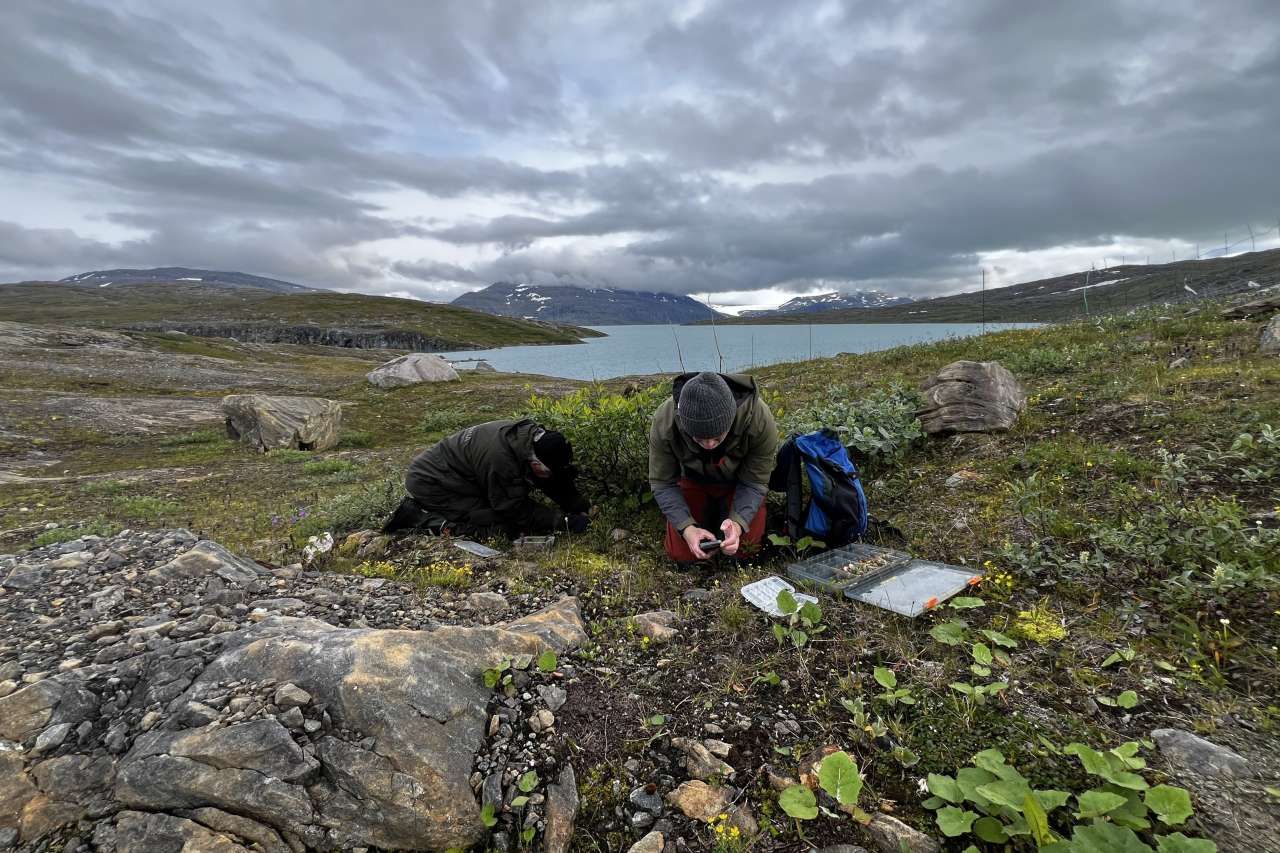
High in the mountains, two researchers crawl around with their eyes fixed on the moss. In just a few days, they have found more than 120 fungal species in Láhko National Park – and several may be new to Norway. One parasol mushroom (Lepiota) may even be new to Northern Europe.
During some days in August, science takes centre stage. The experts are surveying the little-known diversity of fungi found in the alpine Dryas heath. They may even discover species that have never been described scientifically before.
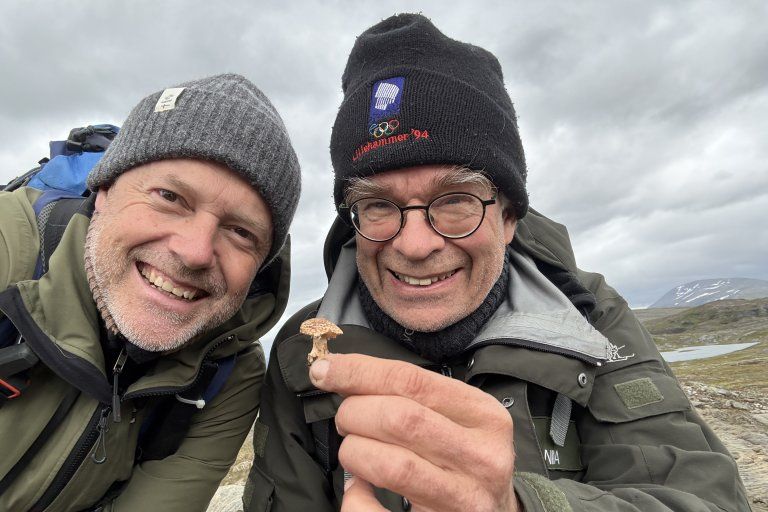
Fungal researchers Thomas Holm Carlsen (NIBIO) and Tor Erik Brandrud (NINA) have found a real treasure: a small specimen of a relatively large parasol mushroom (Lepiota). So far, it is only known from the French and Italian Alps. Photo: Thomas Holm Carlsen
“Wow! This is good. Very good.”
Project leader Tor Erik Brandrud from the Norwegian Institute for Nature Research (NINA) examines the fungi with great enthusiasm. He has spent a lifetime studying fungi and is well known in the international mycological community.
“Within just a few days, we have found more than 120 different fungal species here in Láhko. I am fairly certain that some of them have never been recorded in Norway before,” says Brandrud.
“I could never have dreamed that we would find this many,” agrees NIBIO researcher Thomas Holm Carlsen.
Carlsen has worked with species and habitat surveys for more than 20 years. When he began specialising on fungi a few years ago, he discovered that the NIBIO station at Tjøtta was just a stone’s throw from areas harbouring an almost completely unexplored fungal diversity. Before long, he also found fungi that turned out to be new to science.
“Wow! This is good. Very good.” Photo: Liv Jorunn Hind
Diversity under pressure
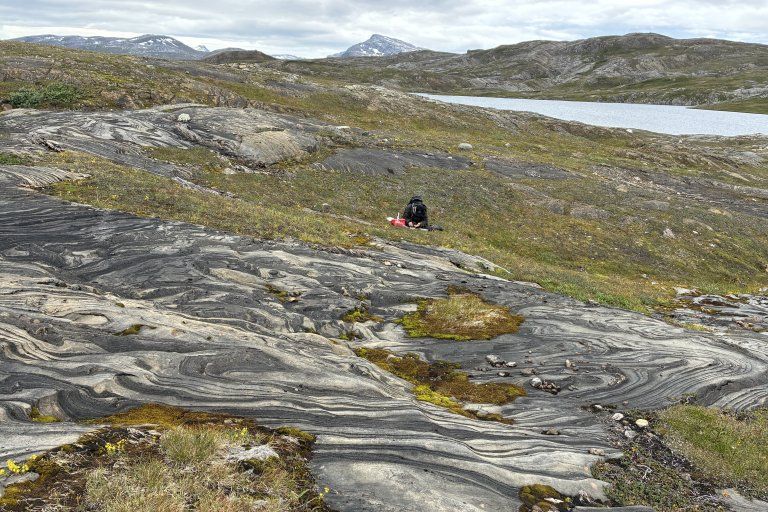
Curiosity about what lies hidden in poorly surveyed mountain areas led Carlsen to Láhko National Park. The park is home to Northern Europe’s largest marble plateau and extensive Dryas heath. For this treasure hunt, he brought along mentor and fungal guru, Brandrud.
The researchers emphasise that it is important to document these species before it is too late.
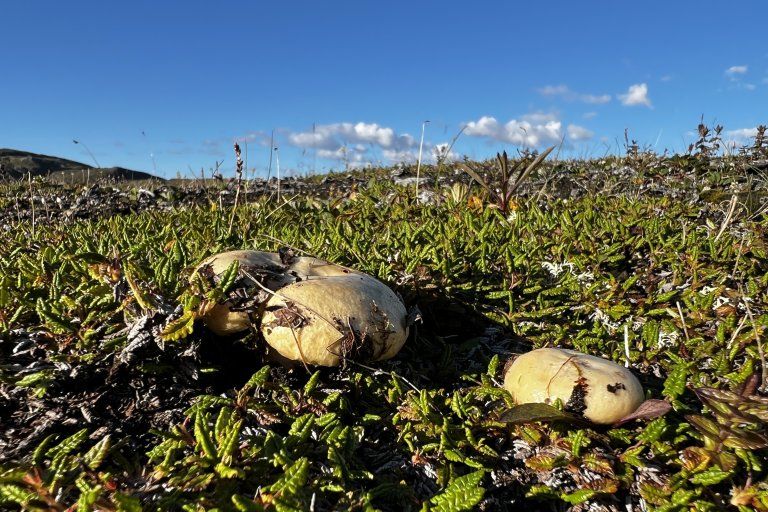
Many of the fungi found in the mountains live in close association with plants. The Dryas milkcap (Lactarius dryadophilus), for example, forms mycorrhizal associations with mountain avens (Dryas octopetala). As the climate changes, the tree line is gradually moving higher up the mountains, while open alpine areas are slowly overgrowing. This has contributed to mountain avens being classified as Near Threatened (NT) on the 2021 Norwegian Red List for Species.
The diversity of fungal species is much greater than one might notice when walking through the open landscape. Photo: Thomas Holm Carlsen
“The mountain avens cushions covering the marble landscape in Láhko are like ‘miniature trees’, with stems up to the thickness of a finger that work their way down into cracks in the marble. These are very old, slow-growing individuals, with an entire little ecosystem of fungal species living around them,” says Brandrud.
“Some of the fungal populations associated with the mountain avens heath are probably as old as the miniature trees they grow with. These ‘mountain avens trees’, with their many inhabitants, will struggle to survive and move when the climate changes and their habitat are overgrown.”
Lactarius dryadophilus is currently assessed as Least Concern (LC), but Brandrud expects this assessment to change when the Red List is revised in 2027. He is himself a member of the expert committee assessing the extinction risk of fungi in Norway.
“To understand ecosystems on a larger scale, we need to examine them in detail – which species are present and what functions they perform. But time is running out. Ecosystems are becoming increasingly unbalanced, resulting in biodiversity loss at an alarming rate,” says Carlsen.
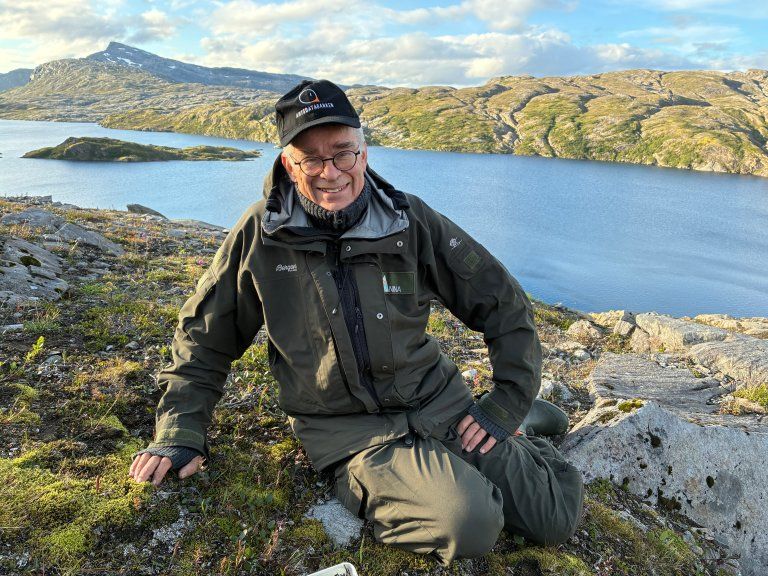
Fungal expert Tor Erik Brandrud is surprised by the great diversity of fungi found in the mountains this year. Photo: Thomas Holm Carlsen
A wet summer is perfect!
“Fortunately, it has been raining continuously in northern Norway this year, creating perfect conditions for fungi to produce their fruiting bodies,” says Carlsen.
Although fungi can be sensitive to weather conditions, they welcome the rain. Sunlight can be a bigger problem. For tiny fungi that barely extend a centimetre above the ground, even a single sunny day can be enough to cause them to dry out.
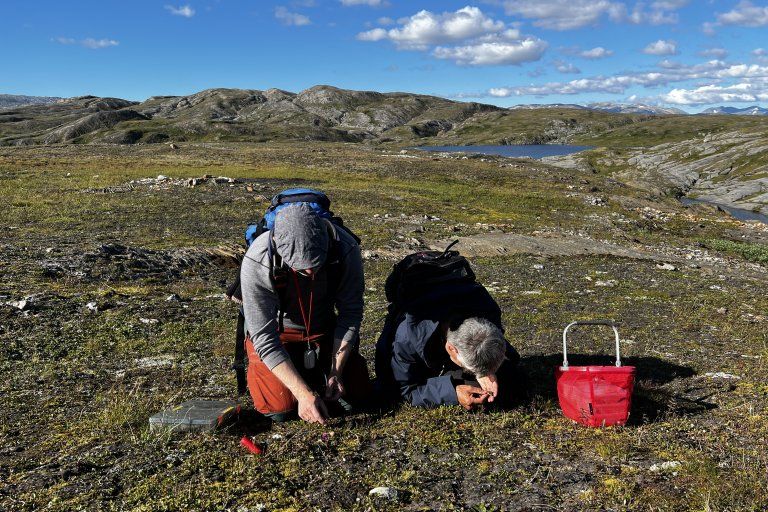
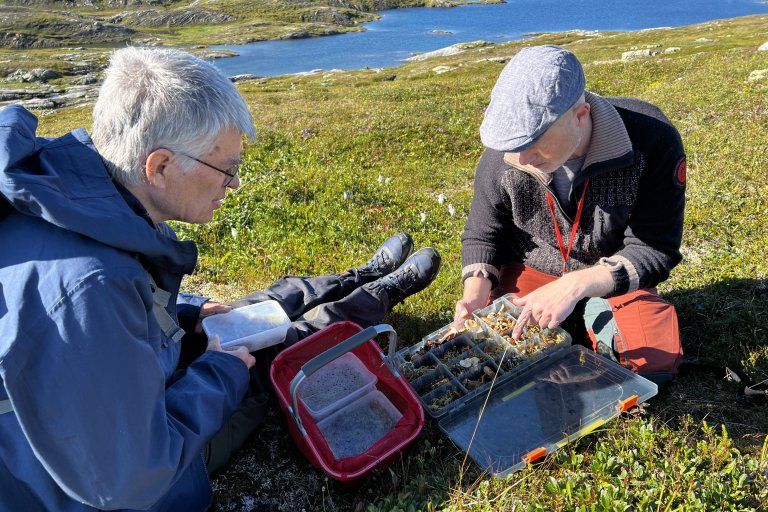
The researchers need to find very young fruiting bodies that have not yet dried out. Otherwise, some species are almost impossible to distinguish from one another. They use their fingernails and knives to dig through soil and sand to collect the entire fungus.
“You need to get the whole base, because the bottom of the stem can contain a lot of information about which species it is,” explains Carlsen.
As a field assistant, it is fascinating to follow the experts. Before long, the conversation shifts to Latin names and scientific descriptions. Not everything is easy to understand – but I love it.
The conversation is filled with Latin names and scientific descriptions not intended for inexperienced ears. It is an impressive display of detailed knowledge and enthusiastic geek out. Photo: Liv Jorunn Hind
Exciting discoveries require patience
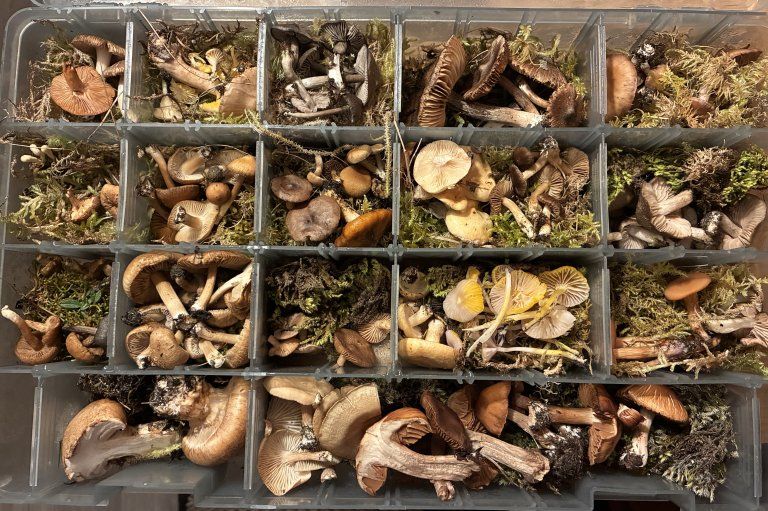
On the first day in the field, we barely get a kilometre from the car. Even so, the collection boxes are already full of different fungal species that need to be taken back for further examination, registration, photography and drying. Back at the field station, the drying cabinet runs around the clock to ensure that the finds are preserved and documented.
“Our aim is to find as many different species as possible, to get an idea of the diversity found in the Dryas heath and in the snowbeds of Láhko. But of course, we also dream of finding lots of new species – or at least species that are new to Norway,” says Carlsen.
This is what a collection box can look like after a few hours in the mountains. Photo: Thomas Holm Carlsen
“We found mostly different species of fiber caps (Inocybe), webcaps (Cortinarius), brittlegills (Russula) and milkcaps (Lactarius), along with some pinkgills (Entoloma), cup fungi (Pezizomycetes), toadstools (Amanita) and even the occasional champignong (Agaricus). The diversity is much greater than most people realise when they walk through these open landscapes.”
The most interesting finds are sent to Hungary or Canada for DNA sequencing. Only then can the researchers determine whether they have discovered species that have never previously been described.
“We found an exciting coral fungus (Clavulina) that may be new to Norway, but we are particularly excited about a parasol mushroom (Lepiota) that we think may be new to Northern Europe. For now, we have nicknamed it the ‘mountain avens parasol’. So far, this type of fungus is only known from the French and Italian Alps. Now we will see what the DNA sequencing reveals,” says Carlsen enthusiastically.
The researchers may have to wait up to a year for the final DNA results. In the meantime, the search for the unknown diversity in the mountains continues.
Lactarius dryadophilus in the Dryas heath. Photo: Liv Jorunn Hind
https://www.nibio.no/en/news/2026/searching-for-unknown-fungi-in-the-mountains
NIBIO

Beispiel der Dun & Bradstreet-Daten
| Firmenname | AUDI Aktiengesellschaft |
|---|---|
| D-U-N-S-Nummer | 315731679 |
| Registrierungsnummer / Beschreibung | HRB1 Register Number (DE) |
| Registrierungsnummer / Beschreibung | 85049B1 Derived Unique Register Number (DE) |
| Registrierungsnummer / Beschreibung | DE811115368 Value Added Tax Number (DE) |
| Telefon | +49 841890 |
| Subjekttyp | Corporation |
| Rechtsform | Deemed Public Limited Company |
| Jahresumsatz | 64 500 000 000 EUR / 71 157 238 500 USD - 01.01.2024 |
| Mitarbeiterzahl | 86 900 - 01.01.2024 |
| Status | Active |
| Adresse | Auto-Union-Str. 1, Ingolstadt, 85057, Germany |
| Webseite | www.audi.com |
| [email protected] | |
| Geschäftsgegenstand | Mfg motor vehicle/car bodies |
| Eigentumstyp | Privately owned |
| Gründungsdatum | 16.04.1884 |
| Gesetzliche Vertreter | Gernot Döllner |
| Eigentümer | Bundesland Niedersachsen, Streubesitz, GOVERNMENT OF QATAR, Ferdinand Porsche Familien-Privatstiftung, Kai Alexander Porsche, Peter Daniell Porsche, Ferdinand Oliver Porsche, Geraldine Porsche, Mark Philipp Porsche, Hubertus Josef Kiesling, Diana Porsche, Andreas Kiesling, Peter Daniell Porsche, Kai Alexander Porsche, Ferdinand Oliver Porsche, Mark Philipp Porsche, Geraldine Porsche, Diana Porsche, Hubertus Josef Kiesling, Andreas Kiesling, Wolfgang Porsche, Stephanie Porsche- Schröder, Felix Alexander Porsche, Christian Porsche, Ferdinand Rudolf Wolfgang Porsche |