AAIB Report: Cagatay CGT-50, (UAS registration n/a)
AAIB zpráva o Cagatay CGT-50 (UAS registrace n/a) uvádí, že během demonstračního letu na Radnor Range se pravé křídlo odtrhlo od trupu a letoun se zřítil poblíž osob stojících pod dráhou letu. Vyšetřování ukázalo, že křídelní spojky byly kratší než design a že konstrukce křídla umožňovala posun spojky a chyběly postupy pro jejich symetrickou montáž, což vedlo k nerovnoměrné distribuci ohybového zatížení na přední spojku při 1 g v přímém letu. Bylo zjištěno, že je pravděpodobné, že do letounu byly namontovány staré díly křídelních spojek z dřívějšího vývojového modelu. UAS operovalo v konkrétní kategorii dle OA CAA; CGT-50 nebyl navržen, vyroben ani testován podle uznávaných standardů a pro provoz v této kategorii nebylo vyžadováno dodržování těchto standardů; výrobce zavedl opatření ke zlepšení kvality a kontroly dílů (dimenzionální tolerance na výkrese, kontrolu dodávaných dílů, sériová čísla spojek, změny návrhu a výrobního procesu a postupy montáže) a Radnor Range si zrevidoval svůj bezpečnostní plán s úmyslem zlepšit provozní komunikaci a řízení rizik.
Cagatay CGT-50, (UAS registration n/a), right wing separated from airframe in-flight, Radnor Range, Powys, 5 October 2023.
While conducting a demonstration flight at Radnor Range the right wing separated from the unmanned aircraft. The remainder of the aircraft descended rapidly, out of control and struck the ground close to personnel who were standing under the flight path.
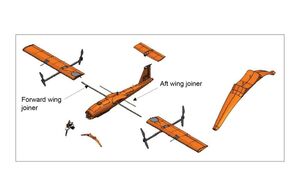
The investigation found that the wing assembly on the accident aircraft did not have sufficient structural strength to carry the wing bending loads encountered in 1 g straight and level flight. Structural components known as wing joiners, which attached the wings to the fuselage, were shorter than the design specification. Together with a wing design that allowed movement of the joiner position and an absence of procedures to ensure the wing joiners were installed symmetrically during aircraft assembly, this created a condition where there was an uneven bending load distribution on the forward wing joiner.
The investigation determined that it was likely that old stock wing joiners from an earlier aircraft development model were inadvertently fitted to the aircraft at the production facility.
The UAS was operating in the specific category under a CAA operational authorisation (OA). The CGT-50 was not designed, built or tested to any recognised standards, nor was it required to be for operation in the specific category.
The manufacturer took several safety actions to improve quality and component control in its production facility. These included introducing dimensional tolerances on design drawings, introducing quality checks on supplied components, introducing serial numbers for wing joiners, modifying the design and production process and introducing wing joiner assembly procedures.
The range reviewed its safety plan and indicated its intention to make several improvements to operational communication and hazard management.
Read the report.
https://www.gov.uk/government/news/aaib-report-cagatay-cgt-50-uas-registration-na