Trade Minister Speech at Chatham House
Britain's trade minister rejects the idea of a “trade tightrope,” arguing the UK can and should maintain strong, two-way trading links with the EU, the US, and other partners, noting £926 billion in exports last year and the global reach of Chinese products. He frames free trade as inseparable from fairness, calling out issues like modern slavery, dumping, environmental harm and subsidies, and explaining that steel protections were taken alongside a steel strategy to uphold the principle of free and fair trade. He underscores a renewed commitment to the WTO, urging reform to make it more relevant, flexible and accessible, and outlines plans for MC14 and MC15 to deliver change. Finally, he warns against slow, line-by-line negotiations, urging urgency in pursuing new FTAs while operating within a rules-based system that benefits all nations.
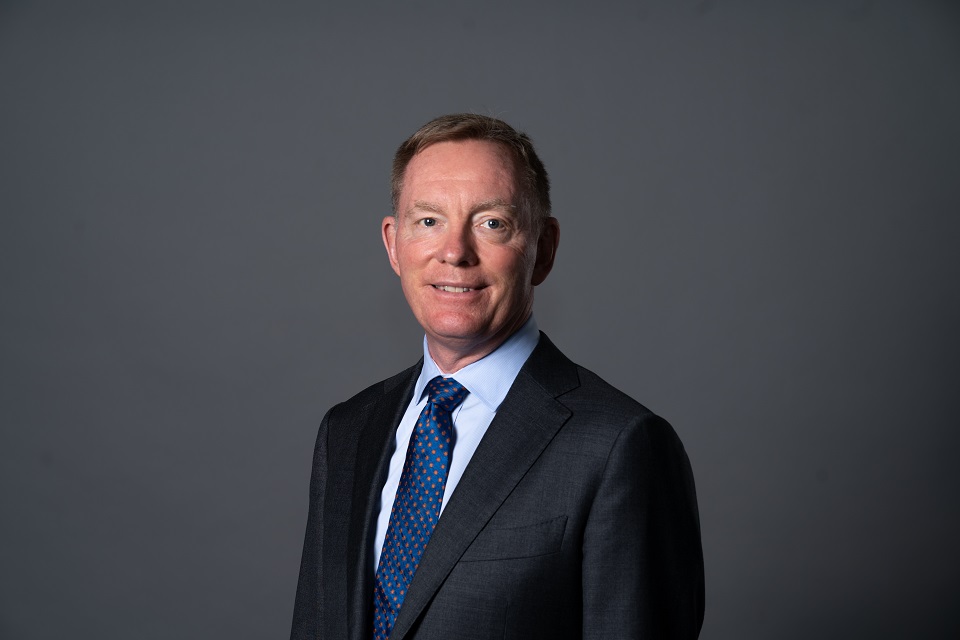
UK Trade Minister Chris Bryant gives a speech at the Chatham House Global Trade Conference.
It’s a delight to be here. I want to start by slightly taking issue with the title of this session - because I’m awkward like that - which is ‘Britain walking the trade tightrope’. I suppose the implication is that we’re engaged in a balancing act between the US and the EU, or that our trade policy is a high-wire act, a dangerous risk in today’s climate, or that we’re navigating a narrow strait between an American and a Chinese ship, and that if we sail too close to either, we risk ruin. I don’t accept this characterization of the challenge ahead.
I don’t think we have to choose between the competing demands of different trading partners. The EU is our biggest trading partner. The US is our biggest single country for exports and imports. And I defy anyone in the room to spend an hour today without any Chinese product. Trade isn’t a push me pull you, that’s a reference to a film from my childhood, and your childhood as well, clearly. We need strong trading relations with all our partners, and I’m delighted to see our exports reach 926 billion pounds last year.
But I do want to go with the tightrope metaphor for a moment, because I’m told the key to tightrope walking is to maintain a low centre of gravity and focus your gaze on the end of the rope rather than your feet. We’ll be trying this later. When it comes to trade, I think that means two things. Firstly, a low centre of gravity means sticking to our values. In our case, that means a commitment, an absolute commitment, to the principle of free and fair trade. We have always prospered best as a nation that is open to two-way trade. It is no accident that at the very heart of the House of Lords lies the wool sack, a symbol of Britain’s early wealth that came from the wool trade - our key Middle Ages export. And over the centuries, we have sought out new markets, bringing in spices, silk and porcelain, tobacco and potatoes, mangoes and mangetout.
And perhaps more than most, our modern economy is based on give and take, endlessly exporting and importing. A British car, for instance, is likely to include components from many countries, just like a French-built Renault will include British electronics and braking systems, or a European Airbus plane would include British wings and engines, making it 30% British. So we, more than most, need to be proud beacons of free trade. If there are sirens beguiling us to perdition on the rocks, they are the arch protectionists who would make us retreat into narrow nationalism.
But I would add that it also has to be fair trade. Modern slavery, dumping, environmental degradation, deliberate anti-competitive subsidies - these all challenge free trade. And it is only right that countries like the UK take measures to protect key national industrial sectors, like steel, when they are threatened by global overcapacity. Hence the measures announced alongside our steel strategy this morning. That’s not a sign - I want to make this very clear - that’s not a sign of a shift in our philosophy away from free trade. It’s a reassertion of the principle of free and fair trade. Steel is a critical sector for the UK, especially at a time when defence expenditure needs to rise. We needed to take action to preserve and enhance our domestic sector after years of deliberate global overcapacity, unfair subsidy, and other protectionist measures have whittled it down from 27.8 million tonnes in 1970 to just 4 million tonnes in 2024. These measures are a reflection of our overall trade strategy: promote what we can, protect what we must.
They don’t undermine free trade. In fact, all the work we do to tackle unfair measures around the world, for instance through the Trade Remedies Authority, are specifically designed to bolster free trade, because whatever our political hue, the UK will always fight for free trade. Of course, free and fair trade isn’t just about trade remedies. It also provides opportunities for other nations, particularly developing countries, to grow their own economies. It’s a simple fact that as lower and middle income economies increased their share in exports, poverty in those nations went down. That’s good for the world and good for the United Kingdom, and good for a socialist like me.
So it’s time we waived the banner of free and fair trade more enthusiastically. I know people look at me with suspicion when I say that. Free trade, really, still, even today? I understand that suspicion. After all, it feels, when you look at the global trading landscape, that free trade is in retreat. We’ve seen nations disregard the rules, distort markets, and use trade to pressurize their neighbours. WTO members have regularly failed to be open and transparent about their state subsidies. And between 2015 and 2023, the number of protectionist measures around the world had more than quadrupled. Populists everywhere proclaim the importance of protectionism. But that doesn’t mean free trade is the wrong approach. It just means it’s even more important that we fight for it. Because for a long time, we have taken free trade for granted. When the WTO was set up over 30 years ago, well, set up earlier when reinforced for the GATT treaties, we assumed the war for free trade was won, that the debate was settled, And that in the future, barriers would wither and collapse in the face of an obviously superior philosophy of free trade.
And so, we stopped making the argument. But unfortunately, it is often the case that one generation believes something, the next generation assumes it, and the third generation forgets it. In the absence of a good case for free trade, 30 years later, rather than trade barriers coming down, we’ve seen more of them go up. And we must challenge that trend, because free trade is what’s best for all of us. But it only works if everyone signs up to it. And that means there must be rules, principles and boundaries that everyone agrees to work within, and a strong sanction regime to make sure those boundaries are strong. That’s why we need a strong World Trade Organisation. Without it, the multilateral trading system that we have all enjoyed will fail.
True, in the 31 years since the WTO was formed, the world has changed and the WTO needs to adapt and reform so it can continue to safeguard free and fair trade. That’s why our top priority at MC14 next week is to lay out a vision for a WTO that is more relevant, more flexible and more accessible. We need a WTO that works. A WTO that works now. And a WTO that works for everyone. And we’re going to MC14 to lay the groundwork to make that happen and deliver change by MC15. Global trade has suffered some quakes in recent years. Between COVID, the blocking of the Suez Canal, Ukraine, attacks in the Red Sea, and of course the current situation in the Straits of Hormuz, we’ve seen crisis overlapping crisis, all of which has shaken the rules-based order. That’s the only time I’m using that phrase in the speech. But if the WTO were to collapse or even fade into irrelevance, that would bring the whole thing crashing down. So yes, despite the rise in global protectionism, despite economic coercion, and despite a more complicated world, we remain committed to a strong WTO and to free and fair trade.
As I said earlier, that’s all part of sticking to our values, or to pursue the tightrope metaphor, keeping our centre of gravity low. Which takes me to my second point, keeping our eyes on the end of the rope, rather than staring at our feet every step of the way. The truth is, we tend to approach too many trade issues one at a time, line by line, step by step. That especially applies to our relationship with the European Union. But our trading posture in the world isn’t a question of one policy after another. It’s a much bigger existential question. Do we subscribe to a you in your small corner and me in mine approach, as the old schoolboy hymn went? Do we think of our economy as hermetically sealed? Or do we commit ourselves to a wholehearted passion for free and fair trade?
The evidence of history suggests that when General Franco tried autarky in Spain, it nearly bankrupted the country. And it’s the total of mutual trade that matters, not the balance of trade with individual countries. Imports, of course, keep costs down. Let me end with another distinction, drawing on the tightrope metaphor. The French for tightrope walker is funambulist. The real danger for the UK, I believe, as trade minister, is not funambulism, it’s somnambulism. We can be laboriously slow. By the time we decide to look at a new FTA and draw up a mandate, a whole 12 months will have passed.
And that’s before we start negotiations which go on for years. We can be too pernickety too. Of course we have to approach all our trading relationships with our eyes wide open, but we need to act with a sense of urgency, determination and drive. That doesn’t mean we have to throw all the cards up in the air and hope they land well. We need to work within the structures and the strictures that aim to provide a global level playing field. But we can’t be hanging about on the tightrope.
https://www.gov.uk/government/speeches/trade-minister-speech-at-chatham-house