From understanding to transformation: why deep disease knowledge matters
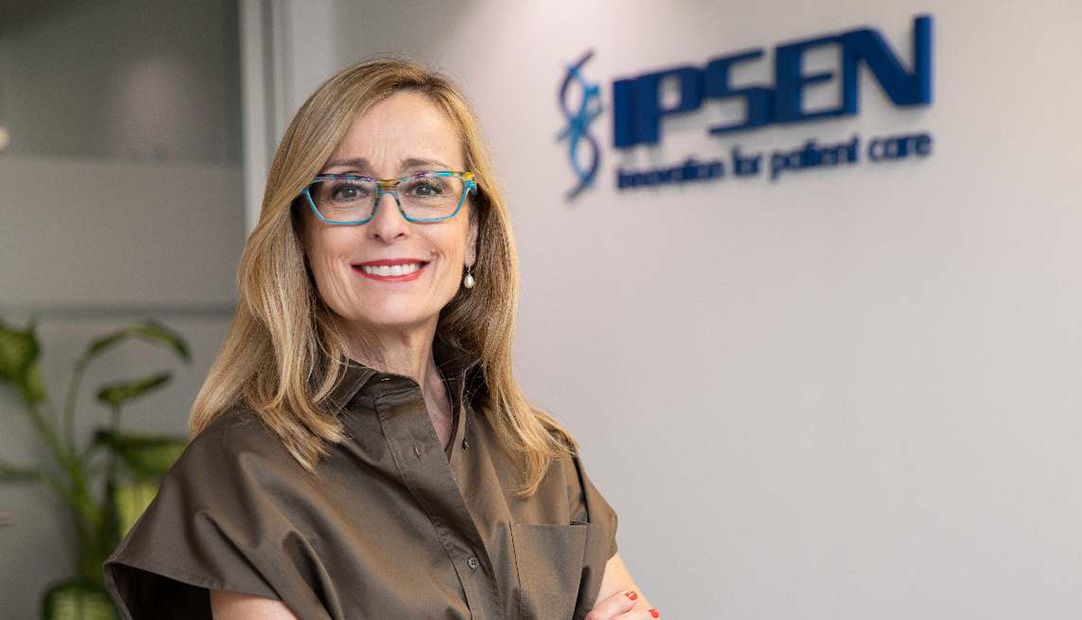
Ipsen Chief Medical Officer Sandra Silvestri says deep understanding of disease and sustained dialogue with physicians, patients and other stakeholders are vital to turning medical innovation into better care. In rare diseases and complex cancers, patients often have limited treatment options and physicians face difficult trade-offs. Silvestri says education, dialogue and partnership can help translate innovation into practice and reshape treatment paradigms.
Ipsen’s Chief Medical Officer Sandra Silvestri argues that deep understanding of disease and ongoing dialogue with physicians, patients and other stakeholders are essential to translating medical innovation into better care. She says this can help reshape treatment paradigms in rare diseases and complex cancers.
By Sandra Silvestri, EVP and Chief Medical Officer, Ipsen
When we talk about medical innovation, it is easy to focus on the medicine itself. The breakthrough discovery. The clinical trial. The regulatory milestone.
But some of the most important lessons begin long before a medicine reaches a patient and continue for years beyond.
These lessons centre on conversations.
A physician describing the difficult decisions they face when existing treatments fall short. A patient sharing the uncertainty of living with a rare disease. A family explaining how the impact of illness reaches far beyond what can be captured in clinical data. These moments remind us that developing a medicine is only part of the journey.
Throughout my career, I have seen how treatment paradigms evolve through scientific discovery and evolutions in clinical experience. Yet across rare diseases and complex cancers, many patients continue to face limited options, while physicians navigate often impossible trade-offs in pursuit of the best possible outcomes.
This is why deep disease knowledge matters.
Sometimes this points us to building on existing standards of care and helping more patients benefit from scientific progress. In other cases, it means pursuing entirely new approaches to care where patients and physicians simply have nothing to turn to.
While the scientific path may differ, the objective is the same: not simply to fit within today’s treatment paradigms, but to redefine them. However, translating innovation into clinical practice can take time.
Physicians often work within treatment paradigms built on years of experience and established standards of care, particularly in complex diseases where treatment decisions carry significant consequences. Meaningful change therefore requires more than scientific advancement alone. It requires ongoing education, dialogue and partnership with the healthcare community.
By remaining curious and learning alongside physicians, patients and other stakeholders, we can help accelerate paradigm shifts that can ultimately have a transformational impact for patients.
https://www.ipsen.com/stories/science/from-understanding-to-transformation-why-deep-disease-knowledge-matters
Ipsen

Dun & Bradstreet data sample
| Primary Name | AUDI Aktiengesellschaft |
|---|---|
| D-U-N-S Number | 315731679 |
| Registration Number/Description | HRB1 Register Number (DE) |
| Registration Number/Description | 85049B1 Derived Unique Register Number (DE) |
| Registration Number/Description | DE811115368 Value Added Tax Number (DE) |
| Telephone | +49 841890 |
| Entity Type | Corporation |
| Legal Form | Deemed Public Limited Company |
| Yearly Revenue | 64 500 000 000 EUR / 71 157 238 500 USD - 01.01.2024 |
| Number Of Employees | 86 900 - 01.01.2024 |
| Status | Active |
| Address | Auto-Union-Str. 1, Ingolstadt, 85057, Germany |
| Website | www.audi.com |
| [email protected] | |
| Line Of Business | Mfg motor vehicle/car bodies |
| Ownership Type | Privately owned |
| Incorporated Date | 16.04.1884 |
| Principals | Gernot Döllner |
| Owners | Bundesland Niedersachsen, Streubesitz, GOVERNMENT OF QATAR, Ferdinand Porsche Familien-Privatstiftung, Kai Alexander Porsche, Peter Daniell Porsche, Ferdinand Oliver Porsche, Geraldine Porsche, Mark Philipp Porsche, Hubertus Josef Kiesling, Diana Porsche, Andreas Kiesling, Peter Daniell Porsche, Kai Alexander Porsche, Ferdinand Oliver Porsche, Mark Philipp Porsche, Geraldine Porsche, Diana Porsche, Hubertus Josef Kiesling, Andreas Kiesling, Wolfgang Porsche, Stephanie Porsche- Schröder, Felix Alexander Porsche, Christian Porsche, Ferdinand Rudolf Wolfgang Porsche |