Carlos Moreno-Yruela to lead new research group at IBEC
Carlos Moreno-Yruela nastoupí jako hlavní vědecký pracovník do nové skupiny Enzymové senzory a chemické sondy na IBEC, který ho přijímá z EPFL. Cílem jeho týmu je vyvíjet chemické sondy a zobrazovací nástroje k pochopení mechanismů onemocnění a sledovat aktivitu enzymů v živých buňkách, aby podpořili objev nových terapeutických cílování. Moreno-Yruela uvedl, že IBECovo multidisciplinární prostředí a zkušenosti s modely nemocí zlepší dopad výzkumu; jeho projekt CHEMTUBIO, podpořený ERC Starting Grant, se zaměřuje na chemii enzymů, které „mažou“ modifikace na mikrotubulech a mají potenciál být cíli léčby rakoviny i kardiovaskulárních a neurologických onemocnění.
El Instituto de Bioingeniería de Cataluña (IBEC) incorpora al Dr. Carlos Moreno Yruela como investigador principal. Moreno Yruela llega procedente de la Escuela Politécnica Federal de Lausana (EPFL, Suiza) y liderará el nuevo grupo Sensores Enzimáticos y Sondas Químicas, centrado en el desarrollo de herramientas de imagen y moduladores de actividad enzimática para desvelar mecanismos de enfermedad.
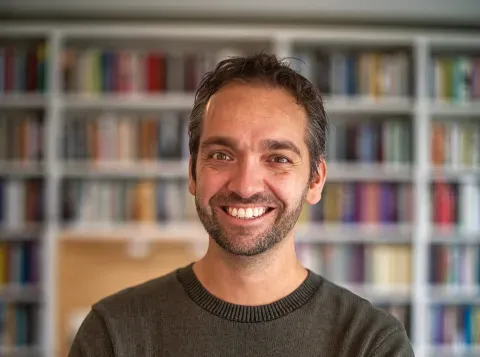
The Institute for Bioengineering of Catalonia (IBEC) welcomes Dr Carlos Moreno Yruela as principal investigator. Moreno-Yruela joins from the Swiss Federal Institute of Technology in Lausanne (EPFL, Switzerland) and will lead the new Enzyme Sensors and Chemical Probes group, focused on developing imaging tools and enzyme-activity modulators to uncover disease mechanisms.
The Institute for Bioengineering of Catalonia (IBEC) welcomes Dr Carlos Moreno Yruela, who joins the centre as Junior Group Leader of the Enzyme Sensors and Chemical Probes group. Coming from the Swiss Federal Institute of Technology in Lausanne (EPFL, Switzerland), Moreno-Yruela was recently awarded an ERC Starting Grant from the European Research Council (ERC) to develop the CHEMTUBIO project.
A chemical probe is a small molecule designed to bind very specifically to a particular protein and act as a kind of tag: it allows researchers to see where and when that protein is active, or to block its activity to find out what happens when it stops working. It is one of the basic tools chemical biology uses to study processes that would otherwise be invisible inside the cell.
This is precisely the aim of Carlos Moreno-Yruela’s group: to develop chemical probes and imaging tools that help us understand the mechanisms of disease, laying the groundwork for future drug-discovery methods. The team focuses on enzymes — proteins that act as cellular «switches» by adding or removing small chemical marks on other proteins, known as post-translational modifications — which, depending on how they are switched on or off, can either drive or slow the progress of a disease.
The group is also developing sensors that, once inserted into the proteins themselves, make it possible to observe enzyme activity inside living cells in real time. This allows disease-causing enzymes to be pinpointed with great precision, and in turn supports the development of platforms able to identify, among thousands of candidate molecules, those with the greatest potential to become an effective drug against them. This is basic research aimed at laying the groundwork for potential future therapies for heart disease, nervous-system repair and cancer.
«IBEC’s interdisciplinary structure, together with its extensive experience in developing disease models and advanced therapies, will help our research have greater impact,» says Moreno.
At IBEC, Moreno-Yruela will carry out the CHEMTUBIO project, selected under the ERC Starting Grant call, which focuses on the chemistry of the enzymes that «erase» modifications on microtubules, a key component of the cell’s skeleton. These enzymes are essential to how our cells function and have shown promising potential as therapeutic targets for treating cancer, as well as heart and neurological diseases.
https://ibecbarcelona.eu/es/carlos-moreno-yruela-to-lead-new-research-group-at-ibec
Institute for Bioengineering of Catalonia

Dun & Bradstreet data sample
| Primary Name | AUDI Aktiengesellschaft |
|---|---|
| D-U-N-S Number | 315731679 |
| Registration Number/Description | HRB1 Register Number (DE) |
| Registration Number/Description | 85049B1 Derived Unique Register Number (DE) |
| Registration Number/Description | DE811115368 Value Added Tax Number (DE) |
| Telephone | +49 841890 |
| Entity Type | Corporation |
| Legal Form | Deemed Public Limited Company |
| Yearly Revenue | 64 500 000 000 EUR / 71 157 238 500 USD - 01.01.2024 |
| Number Of Employees | 86 900 - 01.01.2024 |
| Status | Active |
| Address | Auto-Union-Str. 1, Ingolstadt, 85057, Germany |
| Website | www.audi.com |
| [email protected] | |
| Line Of Business | Mfg motor vehicle/car bodies |
| Ownership Type | Privately owned |
| Incorporated Date | 16.04.1884 |
| Principals | Gernot Döllner |
| Owners | Bundesland Niedersachsen, Streubesitz, GOVERNMENT OF QATAR, Ferdinand Porsche Familien-Privatstiftung, Kai Alexander Porsche, Peter Daniell Porsche, Ferdinand Oliver Porsche, Geraldine Porsche, Mark Philipp Porsche, Hubertus Josef Kiesling, Diana Porsche, Andreas Kiesling, Peter Daniell Porsche, Kai Alexander Porsche, Ferdinand Oliver Porsche, Mark Philipp Porsche, Geraldine Porsche, Diana Porsche, Hubertus Josef Kiesling, Andreas Kiesling, Wolfgang Porsche, Stephanie Porsche- Schröder, Felix Alexander Porsche, Christian Porsche, Ferdinand Rudolf Wolfgang Porsche |