AAIB Report: Hoffmann H36 Dimona, G-CIMC
The AAIB report concerns a fatal accident involving a Hoffmann H36 Dimona, G-CIMC, during an introductory flight at Darley Moor on 8 April 2025. In the early moments after takeoff the aircraft wallowed at very low level, rolled rapidly to the right and descended nose-down from about 100–150 ft agl, with impact forces unsurvivable for both occupants; the investigation could not determine why it did not climb normally or what prevented a successful forced landing, though no engine fault was found and an anthropometric study suggested possible inadvertent throttle reduction or trim movement. The investigation noted a lack of auditable weight-and-balance records, with the accident flight payload around 206 kg (above the stated maximum of 170.6 kg, though weighing data cited 184 kg), and safety actions include online data capture and flight waiver requirements before flights, plus British Gliding Association guidance to emphasize flight preparation and weight reporting.
Fatal accident involving a Hoffmann H36 Dimona, Darley Moor Airfield, Derbyshire, 8 April 2025
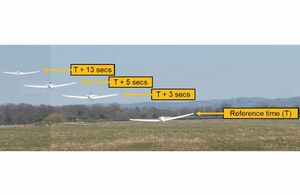
The accident occurred on an introductory flight experience bought for the passenger by a family member. At very low level in the moments after takeoff, the aircraft was seen to start “wallowing” before it rolled rapidly right and fell to the ground in a steep nose-down attitude from approximately 100-150 ft agl. The impact forces were unsurvivable for both pilot and passenger.
Recorded data showed that G-CIMC’s lift off from the runway was as expected, but the aircraft then began yawing to the right and was subsequently unable to maintain a safe climbing speed or trajectory. The “wallowing” observed by several eyewitnesses was suggestive of an aircraft at or close to the aerodynamic stall. The investigation was unable to determine why the aircraft did not climb normally or what factors contributed to the pilot not being able to carry out a successful forced landing when the achieved climb performance was not as expected. The investigation did not find evidence of any technical issue that might have limited engine performance. An anthropometric study found the potential for fouling of the controls meant that an inadvertent throttle reduction was a possibility and that inadvertent movement of the trim was possible but not likely.
The investigation did not find an auditable record of weight and balance (WB) calculations made by the pilot on the day and, although the pilot had been observed preparing the aircraft for flight, the Daily Inspection (DI) book had not been signed. The aircraft had a relatively limited maximum payload of 170.6 kg, although an error in the aircraft’s most recent weighing report stated the payload limit was 184 kg. The investigation calculated that G-CIMC’s payload on the accident flight was approximately 206 kg. While the aircraft took off above its maximum approved mass, the investigation considered that to be a contributory, rather than causal, factor.
The operating club has taken safety action to amend its flight booking processes to require the completion of an online data capture and flight waiver form by customers before any flight experience is scheduled. Boarding weights declared on those forms would then be checked at the airfield before a passenger’s first flight.
The British Gliding Association (BGA) wrote to its member clubs reiterating guidance on introductory flights and highlighting the importance of flight preparation. It also plans to issue a notice to all its inspectors highlighting the need to identify all relevant information, including a non-lifting parts limitation, when producing aircraft weighing reports.
Read the report.
https://www.gov.uk/government/news/aaib-report-hoffmann-h36-dimona-g-cimc