Government cracks down on waste crime to clean up streets and restore pride in communities
The government and the Environment Agency have unveiled a sweeping Waste Crime Action Plan with zero tolerance for illegal dumping, aiming to close loopholes and empower regulators to act at the source. Offenders could face up to 20 hours of unpaid work cleaning streets and parks and be required to repay cleanup costs, with new police-style powers and restriction notices that can shut down operations, plus up to 51 weeks in prison for those who ignore them. The plan boosts enforcement with an extra £45 million over three years, funds cleanup of some of the worst sites (about 48,000 tonnes) in Wigan, Sheffield and Lancashire, and introduces measures such as Landfill Tax rebates for local authorities, penalty points on driving licences for fly-tipping, and naming illegal operators. A new Intelligence Unit and public reporting channels will help authorities deter, disrupt and stop waste crime, acting earlier and faster to protect communities and the environment.
Some of the worst illegal waste sites across England to be cleared, restoring pride in our communities
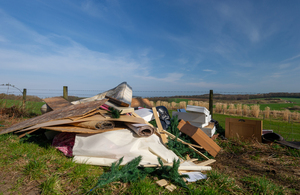
Waste criminals across England face their toughest ever crackdown, as the government and Environment Agency unveil a sweeping package of measures targeting illegal dumping.
The new Waste Crime Action Plan sets out a zero-tolerance approach, with action to prevent waste crime at its source by closing loopholes and equipping regulators with the tools they need to stop waste criminals.
Under the plans, the government will ramp up efforts to punish offenders committing waste crime. This could see them ordered to complete up to 20 hours of unpaid work cleaning streets and parks as part of new “clean-up squads” and required to repay the cost of clearing the waste they illegally dumped.
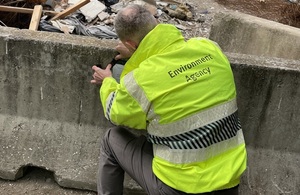
Expanding enforcement activity is key, and the Environment Agency will also increase its on-the-ground activity against waste criminals – intervening earlier on larger sites. Backed by an additional £45 million from the government over the next three years, this will strengthen enforcement activity and ensure waste criminals face the consequences of their actions. This represents a significant uplift of the Environment Agency’s enforcement budget, which stood at £10 million in 2024/25.
The government will directly fund the clean-up of some of the worst illegal waste sites in the country including in Wigan, Sheffield and Lancashire - where a combined 48,000 tonnes of waste has been illegally dumped. The Environment Agency has already conducted preliminary assessments of these sites, with further clean-up assessments to come.
The government is forcing fly-tippers to pay to clean up illegal waste sites, it will also introduce a Landfill Tax rebate for local authorities that step up to clear sites, easing financial pressures on authorities.
For too many communities across England, criminals have left them living in the shadow – and the smell – of illegal waste sites – but this government will not put up with it.
Secretary of State for the Environment, Food and Rural Affairs, Emma Reynolds said:
Waste criminals have been damaging our communities, countryside, environment and economy for too long. This Action Plan sends a clear message: dump illegally and you will face the full consequences.
Waste criminals will be forced to join clean up squads and made to pay for the clearing of illegal waste sites. We will give enforcement officers new police-style powers to bring offenders to justice.”
As part of a new 10 Point Plan, the Environment Agency has set out how it will act earlier to address illegal activity and deliver more consistent enforcement action. This includes making greater use of restriction notices – powers that can shut down an illegal waste operation immediately, with no warning. Any operator who ignores a restriction notice faces up to 51 weeks in prison.
Where evidence shows that carriers or operators are handling waste illegally, the Environment Agency will also act decisively – suspending or revoking their permits and deregistering authorisations that will shut them down.
Chief Executive of the Environment Agency, Philip Duffy said:
Waste crime is not a new issue, but the threat is evolving and our response needs to move up a gear.
We will act earlier, faster and smarter by shutting down illegal sites before they become established, using our powers decisively to strip rogue operators of their permits, and working with police, HMRC and councils to go after criminal assets.
These measures will ensure we stay one step ahead of waste criminals and protect the communities, businesses and environment that they blight.
But we can’t fight this battle on our own and will need the public’s eyes and ears to report illegal dumping through Crimestoppers or our incident hotline.”
The measures announced today represent a fundamental step up in tackling waste crime, targeting the problem at its root to prevent illegal sites from ever taking hold. Measures include:
-
New enforcement powers: Defra and the Home Office will arm Environment Agency officers with new police-style powers to intervene earlier, bring more criminals to justice and hit organised gangs where it hurts by disrupting their finances.
-
Boosted enforcement budget: An additional £45 million for the Environment Agency to spend on waste crime enforcement over the next three financial years, on top of the £5.6 million increase for this financial year announced previously.
-
New Intelligence Unit to identify risks earlier: The Environment Agency will create a new Operational Waste Intelligence and Analysis Unit to hunt down waste criminals using every tool available – from aerial surveillance to financial data – and ensure enforcement is faster and smarter.
-
Penalty points on driving licences: Defra and the Department for Transport will give courts the power to award penalty points on driving licences for fly-tipping offences. Litter louts responsible for the most serious cases could face losing their licence altogether. This will make it harder for repeat offenders to continue dumping illegally.
-
Naming illegal waste operators: For the first time, illegal waste operators will be named and shamed by the Environment Agency. Information will be shared across the waste sector to put waste criminals on notice and ensure waste is not put in the wrong hands.
-
Supporting landowners: Defra will work with the insurance industry to create more comprehensive policies and remove any existing barriers, helping farmers, businesses and landowners to be covered for the cost of clearing illegally dumped waste from their land.
-
Clean up the worst illegal waste sites: the government is now committing to clearing up some of the most egregious sites and will start on-site feasibility assessments for the following sites as soon as possible:
- Bolton House Road in Wigan where 18,000 tonnes of waste was dumped
- A stretch of land in Hyndburn where 10,000 tonnes of waste was dumped
- An industrial site in Sheffield where 20,000 tonnes of waste was dumped
- A Landfill Tax rebate scheme for local authorities: The government is aware of concerns that Landfill Tax can be a blocker to clearance of high-risk illegal waste sites. We will therefore develop with local authorities a rebate scheme for landfill tax to tackle this issue.
Waste crime costs the English economy £1 billion every year, with an estimated 20% of all waste illegally managed. The criminal networks behind it are becoming increasingly sophisticated, causing serious harm to communities and the environment, undercutting legitimate businesses and depriving the public purse of millions in lost tax revenue.
The Action Plan builds on work already underway in the government’s war on waste crime. Since coming into power, this government’s work to tackle waste crime, includes bolstering the Joint Unit for Waste Crime to 20 specialist officers.
Successes include a serial waste crook being forced to pay over £1.4 million for widespread illegal dumping, as well as more arrests being made as part of an investigation into illegal tipping at a site in Kidlington.
Two arrests were also made in February in relation to waste dumped in a field near Romford, with a lorry seized and mobile phones and a laptop recovered as evidence.
Chair of the Environmental Services Association (ESA) and Executive Vice President UK, SUEZ Group, John Scanlon, said:
The scourge of waste crime blights communities, damages the natural environment and undermines investment in Britain’s circular economy. Factoring in all types of waste crime, including landfill tax fraud, we believe the cost to the UK economy now exceeds a billion pounds a year.
ESA members therefore welcome Government’s commitment to increase funding for waste crime enforcement and to deliver earlier, faster and more effective interventions to deter, disrupt and stop illegal activities before they become environmental and financial disasters. Legitimate industry will play its part, in partnership with regulators, by sharing intelligence to help catch criminals, and by continuing to campaign for legislative change to ensure regulators and enforcement agencies have the power and resources they need to effectively deter criminals from waste activities.