Attorney General's Harry Street Lecture speech
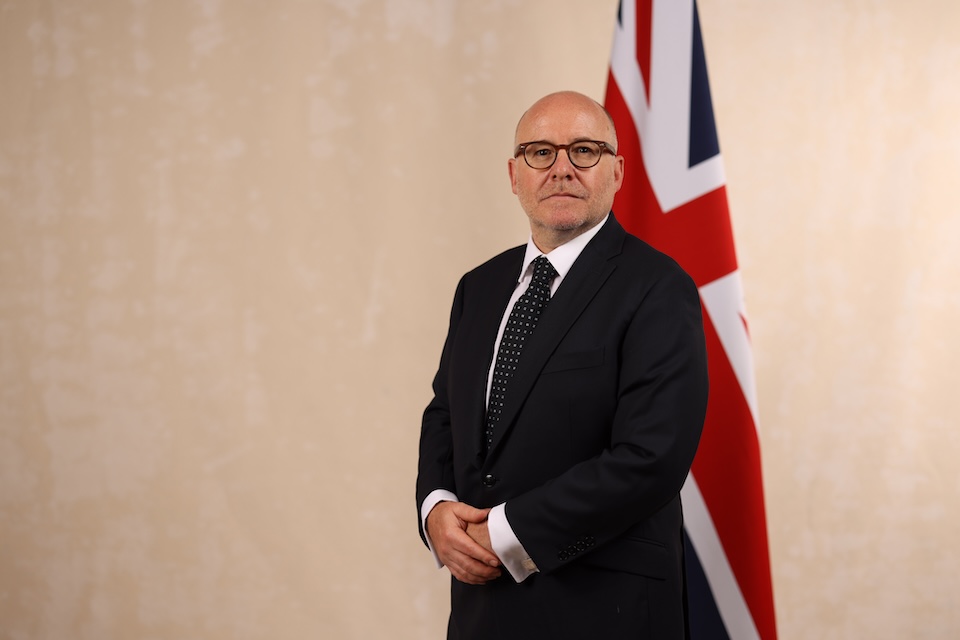
Attorney General Richard Hermer KC delivered the annual Harry Street Lecture in Manchester, stressing that the international rules-based order remains essential for Britain’s interests and must be defended and updated, with the European Convention on Human Rights (as implemented in the Human Rights Act) at its core. He argues that the Convention has repeatedly protected ordinary people—citing cases from Jeanette Smith and Graeme Grady to the Hillsborough inquest and the Worboys decision—and sets out four reasons why upholding international law benefits the UK: it serves national interest, a world without rules descends into chaos, it guides wise policy decisions, and it embodies a moral purpose. He also advocates maintaining NATO and strengthening defence, while recognizing the ECHR’s British roots, adaptability, and the need to modernize it for today’s challenges, honoring the legacy of Harry Street.
The Attorney General Richard Hermer KC delivered the annual Harry Street Lecture, highlighting the importance of upholding the international rules-based order.
It’s a pleasure to be with you all this afternoon, and a privilege to be asked to deliver this Harry Street lecture.
I want to use my time this evening to address two closely connected themes: first, I want to talk about the enduring importance of what has come to be known as the international rules-based order – I want to describe the benefits that it brings to this country and the world at large; and secondly, I want to exemplify that argument by looking in particular at how the European Convention on Human Rights time and time again serves the interests of ordinary people, protecting and vindicating our hard won rights.
Now, I first came here to Manchester as a student in 1988, at the height of what was known as ‘Mad-chester’.
We drank, danced and frankly drank again, but my friends and I, like almost everyone, were oblivious to what was coming.
All that we had assumed about the world we grew up in was about to be fundamentally reshaped in a matter of days.
At the start of my second year, I chose as an option a course on the politics of Eastern Europe. It was supposed to be about the contemporary politics of modern communist states but in November 1989, almost overnight, it turned from a politics course into a history module.
Across the continent extraordinarily brave people were quite literally tearing down the walls that communist regimes had used to hem them in.
The revolutions of 1989 were about that timeless human desire for freedom and for fundamental rights to be respected. The cries on the streets of Berlin, of Prague and Budapest were to be able to enjoy a full range of human rights; the right to freedom of expression, the right not to have a knock on the door from the secret policeman and the right to choose who governed them.
It was a moment of profound optimism. There was a wonderous sense, visceral excitement, that ordinary people were able to dictate the terms of their own history under the banner of democracy and human rights.
Almost 40 years on, I am conscious that tonight few in this audience will be feeling optimistic about the state of the world.
We are reeling from the horrors of what nations are prepared to do to each other and the immense human suffering that causes.
We witness the ongoing brutality of Russia’s unlawful invasion of Ukraine, the atrocities being committed by the warring factions in Sudan, the tens of thousands killed in Gaza, the thousands of pro-democracy protestors killed on the streets of Iran and the current conflict in the Gulf - where there has been much suffering of ordinary people across the region and anxiety across the globe.
And if this is not reason for pessimism enough – we are witnessing the emergence of a narrative that international law is dying, that it is a code suitable perhaps for a gentler age but no longer.
It has become fashionable for some people to say that we are entering an era in which power alone dictates outcomes. An age in which the rules are written by the strong, on their own terms, and the protections afforded by international law are to be enjoyed only by a privileged few.
This argument is not new.
In fact, they take me back to my time studying here… One of my first lectures in political thought was on Hobbes and the Leviathan.
Hobbes argued that, to escape the disorder of anarchy, authority must ultimately rest with a sovereign powerful enough to impose order, even at the expense of ordinary moral constraints. But the ideas runs deeper still.
In The Republic, Plato presents the argument through Thrasymachus that justice is simply the interest of the stronger: that might, in effect, makes right.
That is the claim we hear echoed again today.
But tonight I want to push back on this re-emerging narrative. To explain why upholding what has come to be described as the international rules-based order remains essential for our country’s interest, as it does for nations around the planet, and why at this moment we should double down on our commitments to human rights and the frameworks that protect them.
A lecture in Manchester provides a perfect platform to do so at an opportune time.
I wanted to come back to Manchester not just to rekindle old memories of hanging out in the Students’ Union and at the PSV club in Hulme…
But because of the historical resonance this city has, of the fight for fundamental rights of citizens, by ordinary citizens, from the clutches of the state.
One mile down Oxford Street at St Peter’s Square, a memorial marks the spot of the Peterloo Massacre where over 60,000 men and women gathered demanding democratic rights and an end to poverty, it was a struggle that ended that day in deaths and mass injuries.
It was also here the Chartist and the Cooperative movements were born, and just a few hundred yards away is Pankhurst House, a key part of the Suffragette history of this country.
Each of these sites is a reminder that the rights we enjoy in this country, and take for granted sometimes as our rightful inheritance, have in fact only been secured by the struggles and sacrifice of those who have gone before us.
And just as our domestic civil liberties were secured through sustained effort and struggle, so too has the international rules-based order been built, shaped, and defended over time.
And the life of Harry Street exemplifies this better than I could.
Harry was born not far from here in Farnworth, the son of a builder and a teacher.
He graduated with a first in law at this University, but in 1942 aged 23 he volunteered for the RAF, with whom he served until 1946.
Having served in a conflict that showed the very worst of what humanity is capable of doing, Professor Street devoted the rest of his life to law – becoming a renowned legal scholar and a professor held in the highest regard, even if occasionally feared, by his students.
Harry belonged to a generation that saw, first hand, what happens when laws are absent and moral restraints give way to violence and to power.
It was that generation that built the post-war settlement, that we now call the rules-based international order.
It was not despite of the experience of the horrors of total war that they saw international law and its frameworks as an antidote to anarchy, but precisely because of it.
These were a battle-hardened generation who had witnessed first-hand the cruelty and cruel realities of what a breakdown in law and moral standards look like.
People who had seen the horrors of combat, liberated death camps and prosecuted in Nuremberg.
They were a remarkable group of political leaders, diplomats, lawyers, academics and human rights advocates who came to together and set about building the structures needed to ensure that the rule of law applies internationally, governing relations between States. It astonishes me when I hear it said that their aspirations are out of date, when they built an architecture of international law precisely for a moment like now, when the world feels fragile again.
Much of that work took the form of international agreements, many centred on human rights, and Britain, along with British lawyers, played a significant role in shaping them.
They insisted that some human rights are universal and cannot simply be left to government to choose whether or not to bestow on their citizens, leading to the creation of the great human rights instruments, not least the Universal Declaration of Human Rights.
They recognised that even during armed conflicts, humanity required basic standards to be observed, not least that civilians be protected as far as possible leading to the four Geneva Conventions of 1949.
They also understood that structures and mechanisms were required to give real meaning to the words on the paper – that was the spur for the creation of the United Nations and its institutions, including the International Court of Justice and Human Rights Committee and Commission.
Now although far from perfect and self-evidentially not a complete cure for humanities worst tendencies, the aspiration to achieve the aims of the founding Charters and Treaties has remained steady across the globe until now.
And at these precarious times this Government believes that these frameworks matter more, not less.
Yet our opponents argue that the UK’s interests are best served by no longer adhering to these rules. I believe their approach is fundamentally flawed and completely contrary to the interests of this country.
I do so for at least four reasons.
Firstly, it makes no sense in purely national interest terms. We are of course a great nation, with one of the world’s most powerful armed forces and one of its biggest economies - but we are not a super-power.
Disregarding the ethical implications for a moment, adopting a ‘might is right’ approach to global affairs might theoretically work fine when we deal with weaker states.
But it either then requires us to accept that we will need to surrender our national interest whenever challenged by a stronger state - or we must choose to ally ourselves so closely with a stronger state that we radically dilute our own sovereignty.
Neither option serves our national interest, nor is it consistent with our proud history as an independent sovereign state. It also simultaneously undercuts all the benefits that flow from our hard-earned reputation as a trusted leader in international law – other countries want to work and trade with us because they know we keep our legal obligations, that we care about our values and decency. Our ancestors took that British sense of fairness and justice and wrote it into many of the precepts which are now considered fundamental in international law.
So, my support for international law is not simply based on principle. It is about what it delivers in practice for this country and our national interest.
Shared rules make Britain more prosperous, allowing us to trade with confidence. They make us more just by underpinning protections for our citizens. And they make us more secure, by enabling cooperation with allies.
Second of four reasons, a world without rules or where nations are free to walk away from their legal obligations is a world that pretty soon will descend into chaos - what Hobbes in a slightly different context would describe as a state of nature.
We know all too well what this looks like in practice. The price paid is human suffering and human misery. Today, as throughout history, it is always ordinary people who suffer most – rarely the leaders.
Thirdly, compliance with international law serves the national interest because it helps guide and inform wise policy decisions. The compass by which any national leader navigates such stormy geopolitical waters such as the present conflict should be a clear-eyed sense of our own national interest. It is here that the international rule of law becomes so important because as leaders, as a nation, we are more likely to navigate these choices effectively, to reach the correct destination, if that compass is calibrated with regard to legal obligations.
Rarely does history look at major violations of international law and judge that it turned out well for the country that breached it –did Argentina gain anything in its attack on the Falklands? Is the invasion of Ukraine working for Russia?
As the Prime Minister has made plain, we need to learn lessons from the past including the 2003 invasion of Iraq - in his steely assessment of the national interest he sees international law as a key element in decision making.
If he had listened to [Redacted political content], unfettered by respect for legal frameworks or the complexities at play, we would have put planes and artillery into battle on Day 1, only to seek to withdraw them on Day 3 – how would that have served Britain’s national interest?
By contrast our position is clear – no to an offensive war, yes to defending ourselves and our allies from wanton and indiscriminate Iranian retaliation and escalation. To a far-sighted strategic leader focused on a robust defence of their nation, international law should not be seen as a hindrance, but as a sage guide.
Fourth, we do not believe in international law only because it is in Britain’s national interest to do so. We believe in it because we believe in the moral purpose that lies behind those laws and frameworks, not least the protection of fundamental human rights.
At the heart of the human rights movement is the recognition as set out in the Universal Declaration itself, of the inherent dignity and of the equal and inalienable rights of all members of the human family, recognising that this is the foundation of freedom, justice and peace in the world.
But human rights law is only a part of that international legal system.
The benefits of international law extend way beyond them in a myriad of different ways designed to improve the quality of our lives.
The ability to travel across borders, to communicate instantly around the world, to trade, to fly, to enjoy our oceans and our environment.
All of this and so much more rests on shared legal frameworks that establish common vocabulary and goals between nation states.
International law is, if you like, the operating system of the modern world.
And like most operating systems – if my phone is anything to go by – those rules need updating from time to time.
Laws must evolve to fit new conditions, too.
But without this foundation, it is difficult to imagine Britain, or indeed the world, we inhabit today.
So far, I have mainly addressed the criticisms of those who would have us adopt the ‘might is right’ approach to international relations.
But I want to be equally clear in my dismissal of the critique that somehow the UK’s interests would be best served by withdrawing from NATO, drastically reducing our defence budget or realignment away from our close allies, for some adopting pacificism as a guiding principle.
That would be a profound mistake that would ignore the lessons of the past – because there will be occasions on which we have to fight to protect fundamental rights.
There is no inherent tension in my view in passionately believing in international law and human rights, while at the same time passionately believing that a strong military is an absolute necessity to protect us in a dangerous world.
It was military strength and valour that defeated Nazism. And the idea that in the face of the threat currently posed by Russia we should be leaving the NATO alliance is utterly reckless.
Russia is a country - run by an oligarchy - which has committed countless war crimes in the execution of its campaign, including the abduction of thousands of children, and who if left unchecked will present an existential threat to our NATO border allies.
So, it is not despite being a human rights lawyer that I passionately believe in the strength and professionalism of our armed forces – it is because of it.
When I was a student here, we were about to embark on an era known as a peace dividend, when military spending reduced. Facing the world as it is today, not as we would want it to be, we have no other responsible choice other than to increase military spending – it is absolutely the right thing to do.
I want to move next to a debate playing out that illustrates the wider battles over international law and the protection of our civil liberties [Redacted political content] that we should leave the European Convention on Human Rights.
Of course, the ECHR is an international treaty, but it was our sovereign parliament that decided to adopt most of the rights it upholds in an Act of Parliament, [Redacted political content] with the Human Rights Act as a manifesto commitment. The White Paper that preceded the Act was called Bringing Rights Home, because it meant that British citizens could claim their rights in British Courts, who are free to interpret them within a national context, rather than access to these rights being confined to the court in Strasbourg.
But even before this, the ECHR has a very British history. It is the centre piece of the Council of Europe, created by Churchill in the post war period to protect democracy, human rights and the rule of law.
Today 46 nations across the entire continent belong to it – all of whom have agreed to be bound by the Convention – compliance with which, as a last resort, can be determined by its judicial body, the European Court of Human Rights.
The rights set out in the Convention will be familiar to everyone in the UK – the right to life, to freedom from torture, to liberty, to privacy, to protest, to ownership of property, to freedom of expression or to exercise your religion.
These are our rights, not the government’s. And they are a huge protection against the overuse or misuse of state power.
At their core, these provisions are concerned with the protection of the individual. They enshrine fundamental rights, some which the State must never infringe, and others which it may only limit when proportionate and justified, usually to protect other individuals or the common good.
As with any set of laws that need to be applied consistently and fairly, there will always be examples of difficult cases, for example involving individuals who have committed dreadful crimes, who will be able to take claims about their fundamental rights to court, to the extent that this does not harm others.
But while detractors of the Convention will inevitably seek to draw attention to such cases, an exclusive focus on them obscures the far broader picture.
The reality is that, time and time again, the Convention has delivered meaningful protections for ordinary people.
Let me give you an example.
I’ll transport you back to the early 1990s, a time when being LGBTQ in the armed forces was prohibited.
At that time, an exemplary RAF nurse named Jeanette Smith, was preparing to sit her final exams. She was a rising star, with the promise of promotion ahead.
But she had a secret. Jeanette was gay.
And a colleague discovered this. An anonymous caller reported her sexuality to the authorities and what followed for Jeanette was a dreadful ordeal.
She was subject to intrusive questioning, about her relationships and about her private life. None of these questions had anything to do with her ability to serve her country.
Despite an unblemished record of military service, Jeanette was administratively discharged from the RAF. It was scandalous. But thankfully, her story did not end there.
Because decades earlier, in 1966, the United Kingdom had taken an important decision. Under Harold Wilson’s [Redacted political content] government, it accepted the right of individuals to bring cases against their own government before the European Court of Human Rights in Strasbourg.
Like so many ECHR cases, that decision would change many lives.
Jeanette Smith, alongside Sergeant Graeme Grady who had also been subjected to the same treatment because of his sexuality, decided to challenge the obvious injustice to them, and the many others who had served their country well but had been discharged because of who they happened to love.
The European Court of Human Rights ruled that their rights had been violated.
Article 8 – the right to respect for private life.
And Article 13 – the right to an effective remedy when those rights are breached.
Jeanette and Graeme did not just win their own case, their victory helped change the law.
In 1999, the European Court of Human Rights ruled in further cases brought by dismissed service personnel that this country’s ban on LGBTQ people serving in the armed forces violated Article 8 of the Convention.
Today it seems extraordinary that this was UK formal policy.
But the manifest injustice it caused was only brought to an end because those whose lives and careers were destroyed could take their case to Strasbourg. They had tried, but they could not uphold their rights before our British courts in the days before the Human Rights Act came became law in 2000.
Their experiences are part of a much wider story, proving that human rights are not just the preserve of high-minded legal arguments.
They are a shield. A shield for military nurses and sergeants.
A shield for ordinary people facing the machinery of the state – such as the elderly or disabled residents in care homes or women seeking justice for sexual abuse.
Now, taking a case in those days to the European Court was not easy.
It required considerable energy, effort and expense, placing the process beyond the reach of most people. For years, lawyers, campaigners and MPs from all parties had argued that these rights should be enforceable at home, in British courts.
It was only after [Redacted political content] that this changed with the Human Rights Act.
Giving British citizens a statutory right to enforce their Convention rights within the UK’s own legal system; without having to go to Strasbourg.
And there are plenty of examples of where the Human Rights Act has made the critical difference.
It was Article 3 which enabled victims of the ‘Black Cab rapist’, John Worboys, to secure justice, by recognising the duty on the police to investigate properly.
The so called ‘positive obligations’ on the State under Article 3 had no equivalence in domestic law – without its protection this landmark decision in tackling gender-based violence would not have happened.
It was Article 2, the right to life, that ensured that the second Hillsborough inquest brought the full facts to light so the families of the 97 were able to secure justice.
It was Article 14, equal treatment, which enabled a severely disabled child, and then his father, to successfully challenge the government’s discriminatory approach to disability living allowance for those who required lengthy stays in hospital.
The Convention is now 75 years old.
But it has never been static.
Again and again, it has shown its ability to adapt, to respond to new injustices, and new challenges.
That is why this country is proud to be part of a process to work with colleagues across the continent to modernise how the ECHR works for today’s challenges.
To ensure it can continue for another 75 years, and beyond.
I’ll end with this.
Like Keir Starmer I spent decades in law before going into politics. Like Keir I believe human rights and international law are forces for good and need to be defended.
Unlike Keir, I am not Prime Minister, but in this dangerous and complicated world, I am profoundly grateful he is.
I frankly dread to think what missteps and miscalculations the country would be made if [Redacted political content] were in charge, [Redacted political content].
I became a human rights lawyer because I believed, and still believe, that the rule of law matters.
You may not always read it in newspapers and newsfeeds but when you look beyond the noise, public support for international law remains strong, even if there are those who would rather turn it into a zero-sum game.
Often those arguments are part of a different kind of politics…
One that exploits people’s fears as an electoral strategy
but never addresses them.
And the same people who spread myths about the European Union are now resorting to the same tactics to get us out of the ECHR and turn our backs on international law.
To do so would be a stain on the legacy of people like Harry Street, of David Maxwell Fyfe, the MP who helped draft the ECHR, of Winston Churchill who founded the Council of Europe, of everyone across this country who benefits from the rules-based order.
Of Jeanette and Graeme, of the Hillsborough victims, of the Worboys victims, of children in residential care and old couples in care homes.
I began by describing the optimism the world felt in November 1989.
History since then has not always followed a straight path.
But I still remain of the view that humanity’s long journey has been one of progress – because time and time again, ordinary people have been willing to stand up, have made sacrifices in order to make this world a better place.
And my sense of optimism is reinforced every time I go to a school or university, because I truly believe that your generation well understand the importance of fighting for rights, of why we need to treat our fellow human beings with dignity and respect.
I know there is a lot of frustration and disappointment in politics right now. It’s frankly the same the world over.
It is a tough environment.
But it is worth it when you can make a difference for the better. Which I believe we are.
And that is not just about making change for the future. Which I believe we are.
It is about properly defending the great things from our past.
The rights I have spoken about today are worth fighting for.
And fight for them we will.
Thank you.
https://www.gov.uk/government/speeches/attorney-generals-harry-street-lecture-speech
[email protected].
+44 2072712460
Společnost / Organizace