Welfare state to working state
The speech argues for transforming the welfare state into a working state by boosting youth employment and reforming apprenticeships. It announces about £1 billion of new investment to create up to 200,000 job and apprenticeship opportunities over three years, including £3,000 hiring bonuses for firms hiring recently out-of-work youths, £2,000 for small and medium enterprises, and new foundation apprenticeships in retail and hospitality, plus a six-month paid Jobs Guarantee for long-term unemployed youth aged 18–24; the total package is around £2.5 billion. It also outlines broader reforms—narrowing the health element gap in Universal Credit, Pathways to Work, Connect to Work, and WorkWell—and devolving funding to mayors to tailor local labour markets, to ensure work and opportunity sit at the heart of society.
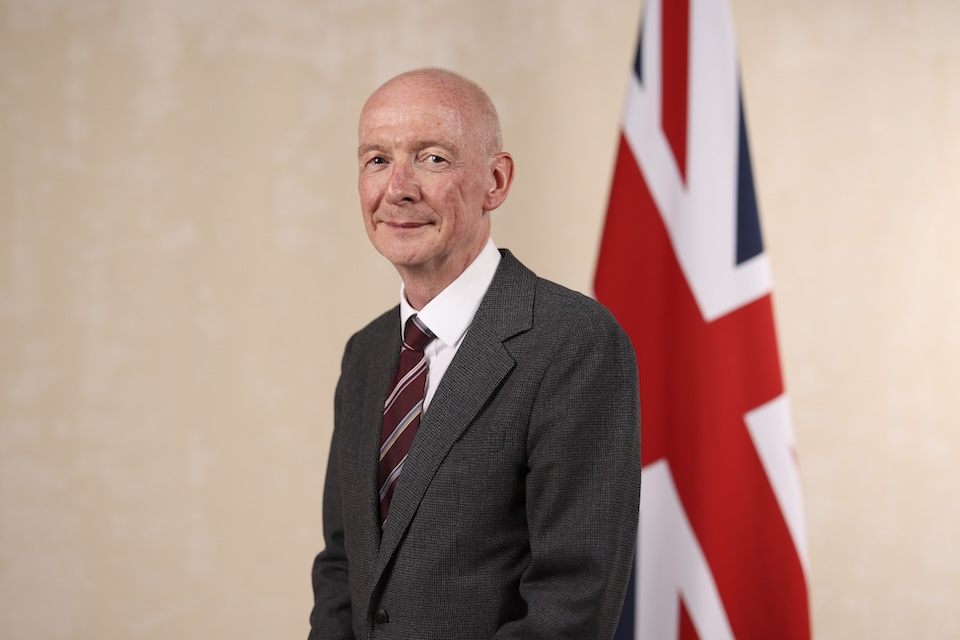
Secretary of State for Work and Pensions Rt Hon Pat McFadden MP speech announcing a further £1 billion investment in youth employment support and reforms to apprenticeships.
Thank you, Tilly. Your story is what this is all about.
Thank you also to Janet, the college principal, for hosting us here today.
I am delighted to be back here at Waltham Forest College, with my ministerial team.
This is the first place I visited when I was appointed to my job as Secretary of State for Work and Pensions six months ago.
This institution changes lives for the better.
It gives its students a platform to learn and to earn.
Its mission chimes with the wonderful young people I have met over the past six months.
The apprentices at Cammell Laird in Birkenhead, making the first new ferry across the Mersey for 60 years.
Roisin, who I met at TFL’s Acton works who told me how an apprenticeship had helped her work her way up to a senior role.
People like Mia who I met at Pinewood studios telling me how programmes like Behind the Screen had “opened up their world”.
I don’t believe the notion that young people are shirkers and snowflakes. Every encounter I have had has convinced me that young people want to work, they want to make the most of themselves and our job is to help them do that.
I have a simple message today: work is good for us.
Not just good for earning a wage, but even more fundamentally, good for pride, purpose and identity that it gives us.
Work is one of the most important ways in which we realise the best versions of ourselves.
And too many young people are missing out on work not just in the short term but sometimes with lifelong consequences - let down by a system that doesn’t give them enough opportunity and too readily funnels them down a path labelled “unfit for work”.
Changing this should be a cause for us all, to give hope to the country’s young people, to show that we believe in them, we back them and want them to have a better future.
Because this is a generational challenge.
An issue not just for young people but their parents and grandparents too.
Who doesn’t want a better future for their children and grandchildren?
Who doesn’t want young people to get good jobs and a good chance in life.
We all should, because it’s in all our interests.
And it will take change. It isn’t enough to tweak a policy here or there. Instead we have tochange the job description of the state to make it more of a platform for opportunity in a fast-changing world. Not just a welfare state but a working state.
That is the least the public should expect from us.
[Political content redacted]
The History
Before the welfare state existed, life’s events could lead to the most terrible human consequences.
Unemployment to destitution.
Illness to desperate choices or to no treatment at all.
Old age to a retirement scarred by dependence and poverty.
Goodbye and good riddance to all that.
The changes made in the last century removed or at least reduced those fears. And they made us a better and more civilised society.
With health care free at the point of use.
Unemployment benefit to support those without a job.
Pensions to ensure decency and dignity in retirement.
Not just blunting the five giants outlined by Beveridge but helping people participate fully in society.
These changes were made through political choices.
And they could just as easily be removed by different political choices.
The welfare state is only as strong as the political and public support for it.
It has survived because there is an acceptance in society that we should support the unemployed, the sick, disabled people and the elderly.
But the public also wants the system to promote work and value for money and they are right to do so.
I want to be clear this morning on behalf of this Government in which I am proud to serve:
If you find yourself out of work, we will help you find a job.
If you can never work, we will support you.
And in retirement your pension will be there for you.
We do not say this because of sentimentality or ancestor worship for the achievements of those who went before us. We say it because of a deep realisation that the safety guaranteed by the welfare state benefits all of us, whether or not we need its help as individuals.
Change over time
So we value this greatly. But as the economy and society changes, so too must the job of the welfare state.
And the means by which it has delivered its aims have changed over time.
State pensions supplemented by the state second pension and occupational pension schemes.
Widened expectations of what a free to use NHS should provide.
Recognition of mental health issues alongside physical health issues, which brings with it a growing need for treatment and help.
In the Blair and Brown years the introduction of Surestart and an active labour market policy with new deals for the young unemployed, disabled people, single parents and the over 50s.
No government has regarded its job purely as preservation.
We are not keepers of a museum. We are stewards of a system which provides security and opportunity and it must adapt over time.
Today the biggest issues facing the system are the challenges of youth unemployment and the growing number of people on long term sickness and disability benefits.
Let me start with the young.
Young people and the labour market
The broad employment picture is stable with historically high levels of people in work, Twoweeks ago, the OBR forecast that unemployment would peak this year and fall in every other year of the forecast.
But there is no doubt there is a particular issue facing the young.
I want to face head on the accusation that this is all a result of this Government’s policies or of decisions taken in the past two years.
The number of NEETs rose by 250,000 in the three years running up to the last election.
Youth unemployment has been rising since 2022.
In fact since 2010 youth employment has never reached its pre financial crash levels.
The issue of graduate unemployment is felt in other countries too.
In the United States graduate unemployment was 5.7% at the end of last year - up from 5.3% the quarter before.
And last summer youth unemployment hit a four year high in the United States.
I know business costs matter. And of course we are mindful of them.
But this issue is deep rooted and long term.
The number of young people not in education, employment or training is much too high at almost a million.
Almost all of the recent rise took place before the last election.
And within it the proportion of these young people who are sick or disabled has doubled and is now around 45% of the total.
The proportion of young people receiving the health top up of Universal Credit has also doubled in the past six years and is now a third of all young recipients.
58% of NEETs have never had a job.
A decline in youth apprenticeship starts has helped kick the ladder away from many young people.
Far too many young people are leaving education and not getting the chance to work.
And it doesn’t all begin when people turn 16. Often the roots are earlier in life. That’s why the work being done by my colleague Bridget Phillipson is so important – to invest in the early years, to bear down on persistent school absence, to give children the best possible start in life.
Acting on this issue of youth inactivity should be a cause that motivates us all.
The human cost is a tragedy. The waste of potential appalling. And the financial costenormous.
Why now?
And there are three big shifts which mean tackling this issue is more urgent today than in the past.
First the technological shift.
AI is becoming more powerful very quickly. It will both destroy and create jobs and change the way we work in ways that right now are hard to predict.
You don’t have to fall for every bit of tech boosterism to appreciate that this is going to have an impact on the labour market.
It won’t just affect NEETs. It will affect graduate jobs too.
The one thing we can’t do is stand back and abandon young people in the face of this change.
Policy has to catch up with the conversation young people themselves are having.
Train people in the new skills needed for this labour market.
Value skilled trades that can’t be replaced by computing power as well as those that will be enhanced by it.
Make sure the UK is a good home for investment in this technology and combine it with traditional British strengths in innovation and creativity.
The second shift is demographic. We are an ageing society. The ratio of working age people to pensioners is expected to fall by around a third in the next 50 years. We simply can’t afford to write off a million young people and leave their talent and energy unused. Investing in the young is a bond between generations, an act of solidarity and a wise investment for the whole country.
And the third shift, related to the second, is on immigration.
For years the UK dealt with much of its labour needs through historically high levels of net migration. Those levels are falling now and expected to fall further.
The old question “why don’t we do more to train our people?” has become more urgent.
So we need to act now. We can’t afford to wait.
Today’s policy announcements for work for the young
And there is hope. We can make a difference to all this.
We don’t have to stand back and leave young people to face it by themselves.
We can choose to step up and help them and that is what we are doing.
It will be good for them, for their family, their local community and the whole country.
In recent months, the Government has already announced a Youth Guarantee to help the young unemployed.
That Guarantee involves intensive work coaching: 300,000 work experience and training places and subsidised work for the long term unemployed.
It goes hand in hand with our changes to apprenticeships, where we’re returning the focus to young people after a 40% drop in young apprentices over the last decade.
All of this is all based on the belief that work is good for you and we want people to experience the opportunity, the obligations and the fulfilment that work brings.
But today we go much further than before with an explicitly pro young people package aimed at helping them learn and earn.
From this summer we will introduce hiring bonuses for businesses if they hire a young person who has been out of work for six months. That bonus will be worth £3,000 per young person.
There will also be bonuses of £2,000 for small and medium sized businesses hiring youngapprentices and both these bonuses can be combined if the young person has been out of work for 6 months.
New foundation apprenticeships in retail and hospitality.
Short apprenticeship units which employers have been calling for in AI, electric vehicle charging point installation and maintenance, Electrical fitting and assembly; Mechanical fitting and assembly; modular building; Solar PV installation; and welding.
For some young people, even with the new support of the Youth Guarantee and these apprenticeship changes, they risk being out of work long-term; with lifelong scarring effects on their health and wealth.
And for that reason, the Jobs Guarantee which we previously announced will be extended to all long-term unemployed young people aged 18-24.
Those young people will get 6 months of paid work at 25 hours per week paid at minimum wage rates.
Altogether this will create 200,000 job and apprenticeship opportunities over the next three years.
Our new deal for new times.
In addition to these new measures the existing exemption from employers’ National Insurance Contributions for workers under 21 will stay in place.
This is an investment of about £1bn. And that is on top of the funding we announced at the Budget. Taken together this is a package of support for young people worth around £2.5 billion.
I am hugely grateful to the Chancellor and the Prime Minister for their support and commitment to making it happen.
All of this is testament to our belief in Britain’s young people.
We want to give young people hope, to give them the chance to use their talent and energy to the full.
This investment is a positive change for the whole country’s future.
Broader reform
And after today there is even more we can do.
That is why the reviews of the future welfare system being led by Alan Milburn and Stephen Timms are so important.
They are about the future of the whole system in the longer term.
Reform has now started. From April the gap between the health element and standard element of Universal Credit will narrow, with the first real terms rise in standard unemployment support for many years.
There is major investment into employment support for sick and disabled people through our new Pathways to Work service.
The Connect to Work programme seeks to get personalised help to people who have been out of work for some time and who in the past were too often signed off and written off.
And the WorkWell programme breaks down the barriers between health advice and employment advice, often aimed at helping people already in work to stay in work.
People don’t live their lives according to Whitehall departmental boundaries and we shouldn’t expect them to.
And we are devolving much of this funding to elected Mayors and local authorities who can tailor these programmes to specific local labour markets.
So on both the incentive side and the support side, change is happening.
But in the debates in recent years over this issue there is something that has not been discussed enough – what I call stickiness – the tendency for people to be on benefits for the long term and the difficulty in coming off them.
Charlie Mayfield pointed out in his Keep Britain Working Report that a young person going on to benefits in their 20s could lose out on £1m worth of lifetime earnings. And it would cost the state £1m to support them.
This is an equation that should pull us up short.
A young person under 25 on the health element of Universal Credit is now less likely to get a job than someone over 55 on the same benefit.
Think about that in terms of the long-term consequences for people’s lives.
A 20-year-old on incapacity benefit is more likely to turn thirty and still be claiming than to have held a steady job for a year.
Around 65% of 20-year-olds claiming incapacity benefits 10 years ago are still claiming them today.
And perhaps worst of all, a young unemployed person is over 70% more likely to die prematurely than their peers.
All of this should tell us that this debate cannot simply be concerned with monthly income levels. It has to be about opportunity and chances in life.
The question we should ask is not just “what are you entitled to” but “how do we help you change your life.”
Our ambition should be to empower people to change their story.
That is where true radicalism takes place.
The OBR forecast is for over 2m more people to come on to long term sickness and disability benefits over the coming years. The variety of conditions has widened. There are more young people with long term health conditions. And we have an old system dealing with new circumstances.
I recently spoke to the Timms Review steering group and met with Alan Milburn.
My message to both was the same: take this chance to advocate radical and powerful change. Enable people to change their lives. Develop a system for the conditions we see today not those of yesteryear. Always remember our obligations to support those who need it and put empowerment and work at the heart of your reports.
I look forward to receiving these reports and taking forward the next stages of change, to making sure our system of help and support is fit for today and is a platform for opportunity, independence and as full participation in society as possible.
Conclusion
[Political content redacted]
Changing from welfare state to working state is a change the country needs.
It needs it urgently at this moment in time for the reasons I have set out.
And it is change worth fighting for.
https://www.gov.uk/government/speeches/welfare-state-to-working-state