UK-first achieved in advanced materials to benefit defence
Britain has established its first sovereign manufacturing capability for ultrahigh-temperature materials by creating a pilot‑scale end‑to‑end process for Ceramic Matrix Composites (CMCs) with Cross Manufacturing Ltd, supported by Dstl and partners. CMCS are lightweight yet as strong as metal and can withstand temperatures over 1,000°C, making them essential for space, hypersonics and advanced propulsion. The project brings critical technology onshore, strengthening UK supply chains, creating high‑value jobs and accelerating the transition from laboratory research to industrial production, demonstrated by demonstrator components such as nose cones, curved panels and high‑temperature seals tested at 1,000°C. The collaboration aims to build a fully sovereign production capability for oxide‑based CMCs, reducing reliance on overseas suppliers and supporting the Defence Industrial Strategy.
The UK has established its first sovereign manufacturing capability for ultrahigh temperature materials - vital for space, hypersonic and propulsion systems.
Cross Manufacturing Ltd, a third-generation family business, has built the UK’s first pilot-scale end-to-end manufacturing process for Ceramic Matrix Composites (CMCs). And the Defence Science and Technology Laboratory (Dstl) has invested in this important development.
More about CMCs
CMCs are lightweight yet as strong as metal. They are capable of withstanding temperatures exceeding 1,000°C—hotter than molten lava.
Unlike conventional metals, they hold their strength and shape under extreme heat and stress. These properties make them essential for:
- Space – protecting spacecraft and satellite components during launch and atmospheric re‑entry
- hypersonics – enabling vehicles to travel at more than 5 times the speed of sound while enduring intense aerodynamic heating
- advanced propulsion – where components must survive prolonged exposure to extreme temperatures
Bringing an important technology back into the UK
Cross Manufacturing Ltd employ around 550 people operating facilities in Bath and in Wiltshire. The company co-invested in the capability’s development, seeing it as a major growth opportunity across both civilian and defence aerospace.
The UK has historically relied heavily on overseas suppliers for these specialist materials, but this work brings a critical technology onshore, strengthening supply chain resilience and ensuring the UK can independently design and manufacture strategic materials.
Dstl Chief Executive Dr Paul Hollinshead said:
This achievement demonstrates how defence investment in science and technology drives high value jobs, advanced manufacturing and regional economic growth.
By moving rapidly from laboratory research to an industrially relevant pilot production line, the programme has accelerated the UK’s ability to convert scientific excellence into deployable capability.
Collaborating with industry and academia
Funded by the MOD’s Chief Scientific Adviser, Cross Manufacturing Ltd worked in partnership with Dstl, the University of Oxford, the National Composites Centre and UK Atomic Energy Authority as well as defence industry firms QinetiQ and MBDA.
The collaboration has delivered a dedicated pilot facility capable of producing consistent, high‑quality composite materials at a scale ready for transition to full industrial production.
Dstl Materials Engineer Chris Hawkins said:
This milestone represents a significant enhancement of UK sovereign capability. These advanced materials will underpin future defence systems, space technologies and high‑temperature applications. Just as importantly, this investment strengthens UK manufacturing, supports skilled jobs and helps ensure we retain control over critical technologies.
Dr Talha J. Pirzada, Research & Technology Manager at Cross Manufacturing Ltd, said:
Through this programme we have successfully transformed UK expertise from research into pilot‑scale manufacturing. The consortium now holds the capability to produce demonstrator components from oxide‑based ceramic matrix composites—a first for the UK. This sets the foundation for a fully sovereign production capability.
Producing and testing demonstrator components
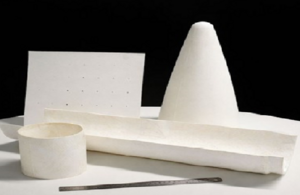
During development, the team produced and tested demonstrator components which included:
- nose cones
- curved panels
- high temperature seals
Mechanical testing was conducted at temperatures of 1,000°C.
As the nation marks British Science Week, this achievement is both scientific and strategic; reducing reliance on overseas supply chains and strengthening the UK’s freedom to operate in space and hypersonics – in step with the ambitions of the Defence Industrial Strategy.
https://www.gov.uk/government/news/uk-first-achieved-in-advanced-materials-to-benefit-defence